


Ho Chi Minh City People’s Committee has issued an implementation plan for 2026-2030 national energy efficiency program, which sets a target to reduce total energy consumption by 8% to 10% by 2030 compared to the Business-As-Usual (BAU) scenario.
It also aims to decrease energy intensity per unit of Gross Regional Domestic Product (GRDP) by 1% to 1.5% annually. These efforts are expected to drive the energy transition and support the realization of Vietnam's Net Zero emissions goal by 2050.
Under the plan, the city will deploy comprehensive solutions to enhance energy efficiency across high-consumption sectors, including industry, agriculture, construction, transportation, public lighting, services, and households.
For the public sector, 100% of newly invested or renovated public lighting projects must adopt energy-saving solutions. Additionally, all major energy-using facilities are required to implement energy management systems in accordance with regulations.
To achieve these objectives, the city will review and refine mechanisms and policies regarding energy efficiency, promote digital transformation in energy management, and encourage businesses to innovate technology. The city also aims to foster advanced energy management models and develop energy-saving services based on the ESCO (Energy Service Company) model.
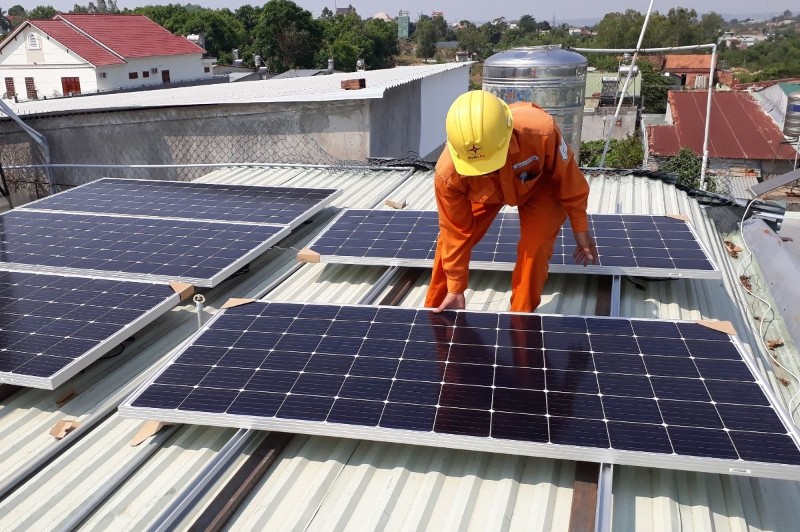
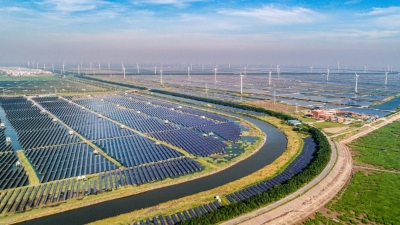
Furthermore, the city encourages businesses to invest in high-efficiency equipment, phase out obsolete technologies, and develop renewable energy sources such as rooftop solar, green hydrogen, green ammonia, biogas, and energy storage systems. Administrative agencies are specifically directed to develop rooftop solar power to improve energy efficiency within the public sector.
In the industrial sector, manufacturing facilities are required to develop annual energy-use plans, modernize production lines, replace high-energy-consuming equipment, and apply advanced production management processes to reduce energy consumption throughout the production cycle.
Regarding construction and urban development, the city will promote the use of energy-saving building materials, high-efficiency equipment, and automated control systems. Furthermore, 100% of new or renovated public lighting systems must utilize energy-saving technology, with an emphasis on expanding LED lighting and automated operations.
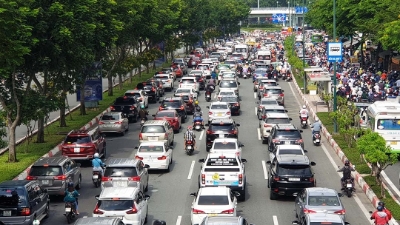
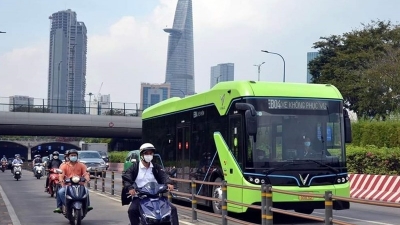
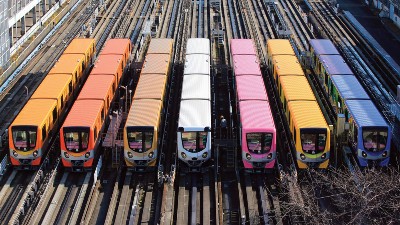
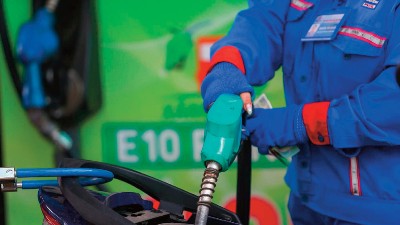
In the transportation sector, the roadmap focuses on developing infrastructure for charging stations and green energy supply. It also encourages the transition to electric vehicles and clean fuels, aims to increase the share of public passenger transport, and strengthens connectivity between transport modes to reduce overall energy consumption and greenhouse gas emissions.



 Google translate