


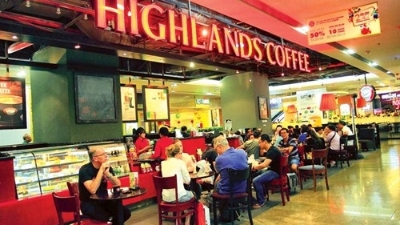
Highlands Coffee officially opened its 1,000th store in mid-June, at 28 Thanh Nien Street in Tay Ho ward, Hanoi. Located beside West Lake - one of the capital’s most distinctive cultural landmarks - the opening represents far more than just a business milestone; it also marks an important moment in the brand’s nearly three-decade journey alongside generations of Vietnamese consumers and the evolution of Vietnamese coffee.
“The milestone reflects an important shift in the Vietnamese coffee market,” said Dr. Matt Kim, Lecturer in Tourism and Hospitality Management at RMIT University Vietnam. “It can also be seen as a sign that Vietnam’s F&B [food and beverage] market is entering a more mature phase.”
Market changes
From the perspective of consumer sociology, Dr. Kim said Vietnam has always had a strong coffee culture, but what has changed over the past decade is the way consumers access and experience coffee.
According to RMIT’s research, coffee consumption has become more routine, more service-based, and more closely connected to consumers’ daily mobility, work patterns, and social lifestyles. In this sense, the expansion of coffee chains reflects not simply rising demand for coffee but also the growing importance of convenience, consistency, accessibility, and space in Vietnamese consumer behavior.
“The growth of coffee chains reflects a shift from product-centered consumption to routine-based and experience-oriented consumption,” Dr. Kim added. “Consumers are not simply buying coffee; they are also looking for a convenient and predictable space that fits into their daily lives.”
Savills believes that Highlands Coffee reaching 1,000 stores isn’t just about growth - it is a clear signal that Vietnam’s F&B market has moved beyond scale-driven expansion into a more mature phase. It shows that brands can now build nationwide networks, supporting expansion into secondary cities and residential catchment areas, not just major CBDs.
It also highlights a structural shift in the market. Larger, well-capitalized chains with stronger operational systems are gaining market share, putting greater competitive pressure on smaller operators. “It reflects a stronger shift toward system-driven operators and brands with scale,” said Mr. William Gramond, Director of Commercial Leasing at Savills Vietnam.
With nearly three decades of experience in the market, Mr. David Thai, Founder and CEO of Highlands Coffee, said Vietnamese coffee culture retains many of its core values, but it has also undergone significant changes alongside the country’s development. While coffee shops were once primarily meeting places for older men, today’s clientele is much more diverse, and includes women, students, office workers, young families, and individuals seeking space for studying, working, or connecting with the community.
This shift in lifestyle has changed how people use coffee shops. Where the product was once the most important factor, today the overall experience is paramount. Space, design, convenience, and the ability to work or meet are all part of the coffee experience.
“Our journey has never been just about coffee because coffee has been part of Vietnam for a very long time,” Mr. Thai said. “What matters most to us is Vietnam’s journey of development. Highlands Coffee is simply part of that process, accompanying the country’s changes and telling the story of Vietnam through coffee.”
Many opportunities
Vietnam is considered one of the world’s most unique coffee markets. Many major coffee-producing countries, such as Brazil, have their own distinct coffee cultures, but Vietnam has a special advantage: it is both a leading coffee producer and home to a vibrant and well-developed domestic consumer market. Encouragingly, not only Highlands Coffee but also many other brands are helping elevate the status of Vietnamese coffee.
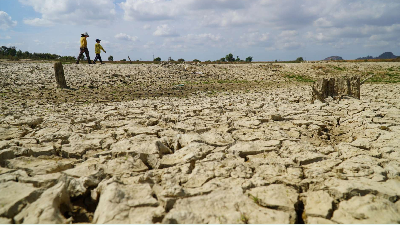
Despite increasing market competition, experts believe the Vietnamese coffee industry still has significant growth potential over the next decade. Mr. Thai pointed out that one of the biggest challenges facing the industry today is climate change. Many studies predict that, by 2050, approximately 50 per cent of the world’s land suitable for growing Arabica coffee could disappear because of environmental and climate change, putting global coffee supply under immense pressure.
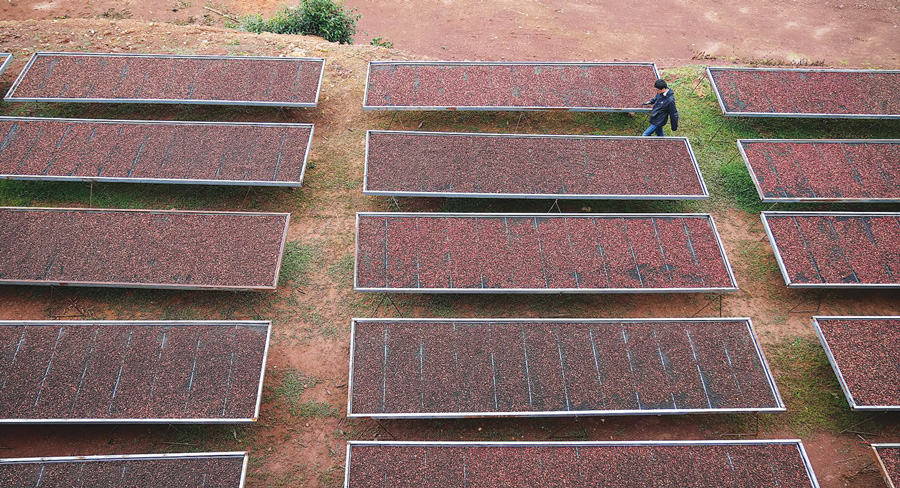
Meanwhile, coffee consumption is rising rapidly, especially in Asia, a region home to a large share of the world’s population. China, India, and Southeast Asia alone have nearly 4 billion people, and coffee consumption in these markets remains low compared with Europe. While per capita consumption in many European countries ranges from five to ten cups a day, in Vietnam and China the figure remains relatively low but is increasing rapidly. This indicates enormous growth potential for the coffee industry.
“In other words, the world is facing a paradox: coffee demand continues to surge while supply is at risk of declining because of climate change,” said Mr. Thai. “In this context, Vietnam has a unique opportunity thanks to its ability to apply technology, science, and innovation to improve the productivity, quality, and value of its coffee industry.”
According to RMIT’s research, coffee and beverages are also important because they offer a relatively affordable entry point into this type of consumption. For many consumers, having a full meal in a clean, comfortable, and branded environment can still be relatively costly. By contrast, buying a coffee or another beverage allows them to access a similar type of indoor space at a much lower price. In this sense, coffee chains provide an affordable form of lifestyle consumption.
“As a result, chain coffee shops have become particularly well positioned in the Vietnamese market because they can provide these benefits through more standardized and systematically managed formats,” said Dr. Kim.
Key strategies needed
At Highlands Coffee, one question the company continually asks is: “How do we build an effective business model while maintaining responsibility toward our customers and those who create value throughout the coffee industry?” Customers are not the only group it serves; farmers are also a crucial part of that value chain.
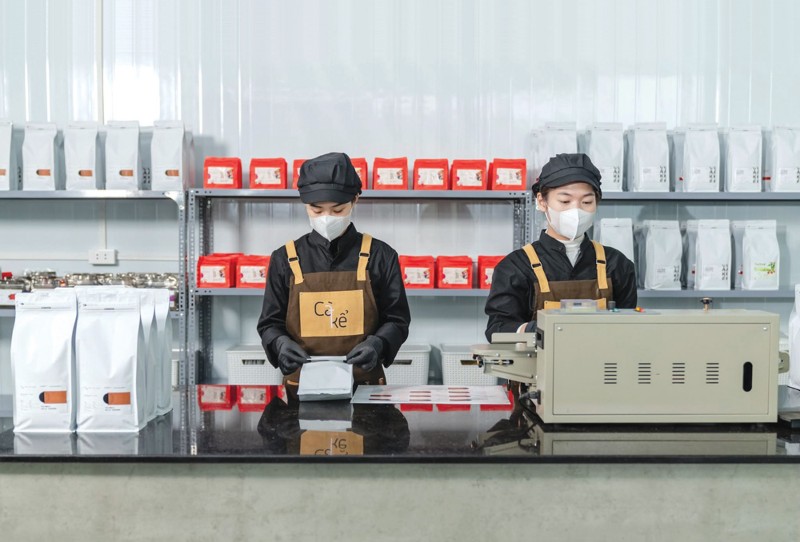
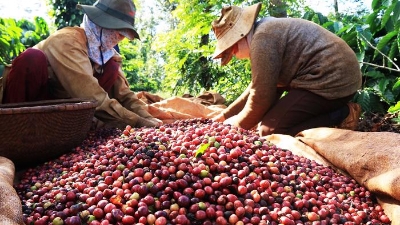
Many people only see the final cup of coffee in the consumer’s hand, but behind it lies a long journey: years of cultivation on the farm, months of research and control over the fermentation process, from temperature and humidity to oxygen levels in the storage environment, followed by roasting, blending, packaging, and selecting the appropriate extraction method to fully showcase the inherent characteristics of the coffee bean. Each step in the value chain plays a vital role in creating the final customer experience.
“I believe the future of the coffee industry must be built on close cooperation between all parties in the value chain, from farmers and processors to businesses and consumers,” Mr. Thai said. “Only by creating value together and sharing that value fairly can the coffee industry achieve sustainable long-term development.”
Location is also an important factor in the development strategy of F&B chains. According to Savills, balancing costs and revenue is becoming increasingly challenging as rents and operating costs continue to rise. Brands are under greater pressure to deliver sustainable margins at each location.
Prime locations still matter, but high rents and competition are pushing brands to expand into neighborhoods, malls, and emerging districts. “We’re seeing a rise in non-CBD districts driven by residential growth and new supply, especially in Hanoi, with the Star Lake district,” said Mr. Gramond. “We’re also seeing expansion into secondary cities and suburban areas, where lower occupancy costs and growing consumer demand are making these markets key to future growth. The strategy now is about building a balanced, multi-location network rather than relying on just a few flagship stores.”
Over the next decade, according to Dr. Kim, Vietnam’s coffee and F&B industry will be shaped by consumers who are increasingly value-seeking rather than simply premium-seeking. Consumers will continue to pay attention not only to coffee quality but also to service quality, hygiene, convenience, atmosphere, consistency, and brand trust. The next stage of competition will therefore be about the overall consumer experience, not just the beverage itself.
The entry and expansion of international brands will also influence the market by raising expectations around service standards, store formats, product variety, and digital engagement. However, their success will depend on how well they adapt to local tastes, price sensitivity, daily routines, and Vietnamese coffee culture. Global reputation alone will not be enough.
Luxury and specialty coffee formats are also likely to grow, but they may be driven more by independent cafés, boutique operators, and smaller specialty coffee shops than by large chain brands. Specialty coffee often depends on specific taste preferences, barista skills, origin stories, and a more personal customer experience, all of which are not always easy to scale across a large chain network.




 Google translate