


What have been the most impressive results in trade and investment relations between Vietnam and Australia since the two countries upgraded to a Comprehensive Strategic Partnership (CSP)?
I am very pleased to say that the trade and investment relationship between Vietnam and Australia continues to grow strongly.
Two-way trade in goods and services has now reached A$30 billion ($21 billion); more than doubling since 2020. This remarkable growth reflects several important factors. It highlights the tremendous opportunities in Vietnam, which continues to be one of the region’s most dynamic and fast-growing economies, and also demonstrates how complementary our two economies are. Many of Australia’s exports to Vietnam serve as key inputs for Vietnam’s manufacturing and export industries, creating a mutually-beneficial trade relationship.
While our trade relationship is performing exceptionally well, I believe there is still significant room to expand investment. The Australian Government is committed to strengthening two-way investment with Vietnam, as well as with Southeast Asia more broadly, and we are undertaking a range of initiatives to encourage greater investment flows.
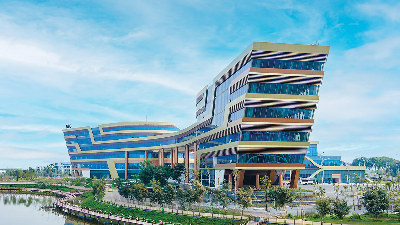
We already have several important Australian investments in Vietnam. In education, RMIT University has been operating here for more than 25 years, with two major campuses. Australian companies such as SunRice are also making significant contributions, particularly in the Mekong Delta region. However, we believe there is much greater potential, and increasing Australian investment in Vietnam remains a key priority for us.
In the context of a volatile global supply chain, how would you assess Vietnam’s role in the supply chain diversification strategies of Australian businesses, especially the potential for cooperation to build more sustainable and resilient supply chains for both countries?
I believe supply chain diversification has become a priority for countries around the world, including both Vietnam and Australia. The disruptions of recent years have demonstrated the risks of relying too heavily on a single supplier or market. As a result, governments and businesses alike are looking to build more diversified, resilient, and sustainable supply chains.
In this regard, Vietnam and Australia are well positioned to work together. We are both members of three major regional free trade agreements: the ASEAN-Australia-New Zealand Free Trade Agreement (AANZFTA), the Regional Comprehensive Economic Partnership (RCEP), and the Comprehensive and Progressive Agreement for Trans-Pacific Partnership (CPTPP). These provide common regional rules and processes, which help strengthen integration between our two economies.
I believe Vietnam and Australia will continue to work closely together in the years ahead in diversifying supply chains.
Australia has affirmed its commitment to supporting Vietnam in its reform process toward becoming a high-income country by 2045. In your opinion, what factors does Vietnam need to improve further to attract more high-quality investment from Australia?
First of all, I would like to congratulate Vietnam on its impressive and sustained economic growth. As I mentioned earlier, it has achieved some significant milestones this year. The FTSE upgrade of its stock market was an important step forward, and the World Bank has recognized Vietnam as an upper-middle-income country ahead of schedule. These achievements demonstrate the country’s strong growth trajectory and make Vietnam an increasingly attractive destination for foreign investment.
The Vietnamese Government is focused on attracting the right kind of investment, and we believe Australia is a strong partner for long-term, sustainable investment. In terms of what investors are looking for, I would highlight three key factors.
First and foremost is regulatory certainty and transparency. Long-term investors want clear rules that are applied consistently and transparently. I know this is an area the Vietnamese Government is paying close attention to.
Second is infrastructure. High-quality transport, energy and digital infrastructure are all essential for attracting investment. Vietnam is already putting a strong emphasis on developing these areas, and they remain important considerations for investors.
Third is the availability of a skilled workforce. This is also a high priority for the Vietnamese Government, and is an area where Australia can make an important contribution through our strong education partnership with Vietnam.
I believe these are some of the key factors that will influence investment decisions, not only for Australian businesses but for international investors more broadly.
What fields of trade and investment cooperation have the strongest growth potential for the two countries?
There are several areas with strong potential for future trade and investment cooperation between Vietnam and Australia, particularly as Vietnam continues its economic transformation with a focus on science, technology, innovation, and digital transformation.
One of the key areas is the green energy transition. This is already well underway in Vietnam. Energy has long been an important pillar of Vietnam-Australia cooperation, and Australia is currently Vietnam’s largest supplier of coal by value. At the same time, both countries are moving toward a greener energy future. Areas such as battery storage, as well as solar and wind energy, are fields where Australia is actively engaged and where we see significant opportunities to work more closely with Vietnam. I believe this is an area where Vietnam and Australia can work closely together because our two countries have highly complementary strengths.
I would also emphasize that while agriculture and education are longstanding areas of cooperation, they remain highly important and are continuing to evolve.
Education has long been one of the pillars of our bilateral relationship and will remain an important area of cooperation. With workforce development and skills becoming increasingly important, Australia has a significant role to play in supporting Vietnam in developing a skilled workforce.
Agriculture is another sector with strong potential. It has been a longstanding area of cooperation, and both Vietnam and Australia are major agricultural producers and exporters. This is an area where we should continue to deepen our collaboration.
One of the most exciting developments I’ve seen is our cooperation through SunRice. Australia has a very active agricultural cooperation program with Vietnam, including efforts to develop climate-resilient rice varieties that require less water and generate fewer emissions. This shows that although agriculture has been a longstanding area of collaboration, it is continuously adapting to meet today’s challenges and future needs.
I would also highlight critical minerals and rare earths, which are becoming increasingly important globally.
Overall, these sectors all fit within science, technology, innovation, and digital transformation efforts. They represent the modern economy, and I believe they offer significant opportunities for Vietnam and Australia to work even more closely together. Once again, Vietnam and Australia have complementary strengths that create opportunities for closer cooperation.
Looking at the long term, what direction do you expect Vietnam-Australia trade and investment relations to develop in the future? What initiatives will the Australian Embassy in Vietnam undertake to promote connectivity between the business communities of the two countries, thereby realizing the goals of the CSP?
Looking ahead, I expect the trade relationship between Vietnam and Australia to continue growing strongly. I would also like to see greater two-way investment, with more Australian businesses investing in Vietnam and more Vietnamese companies investing in Australia.
Beyond traditional trade, I hope to see our businesses become more integrated through deeper supply chains and stronger long-term partnerships, particularly in the emerging sectors I mentioned earlier. I believe there is significant potential for that.
From the government’s perspective, and as an embassy, one of our key roles is what we sometimes call “matchmaking” - bringing together businesses and investors that we believe are a good fit. We organize business and investment missions, promote Australia’s strengths, and also help Australian investors better understand the opportunities available in Vietnam.
We also have a new Australian Business Champion for Vietnam, Ms. Peggy O’Neal, who was recently appointed to the position by the Australian Government and is also the Chancellor of RMIT. She will play an important role in strengthening business engagement between our two countries.
In addition, we are making a strong effort to attract investors. Australia has one of the world’s largest managed superannuation funds, and we want to encourage those investors to explore opportunities in Vietnam, including the potential offered by the International Financial Center.
 Google translate