



Vietnam imports some 400,000 tons of plastic waste each year to supply its recycling industry; a striking paradox in a country that itself generates between 1.8 and 3.9 million tons of plastic waste annually, of which only 10-15 per cent is recycled, according to the United Nations Development Programme (UNDP) Vietnam. The mismatch highlights a fundamental weakness in the country’s recycling ecosystem: while plastic waste is abundant, much of it never reaches recyclers in a form that can be turned back into new products.
As Vietnam advances its circular economy ambitions, the policy landscape is evolving alongside the recycling industry. Since introducing Extended Producer Responsibility (EPR) in 2022, the government has strengthened waste segregation at the source while exploring incentives to encourage greater use of post-consumer recycled (PCR) plastics. Yet translating these ambitions into a functioning circular economy will require more than policy alone. The UNDP estimates Vietnam will need more than $6 billion to expand collection, sorting, and recycling infrastructure, alongside additional investment in waste reductions and circular design.
These issues framed discussions at the “Roundtable: Industry Perspectives on Advancing Plastic Circularity in Vietnam,” hosted recently by UNDP Vietnam, where policymakers, recyclers, consumer brands, and development partners examined how to strengthen every stage of the plastics value chain - from collection and feedstock to recycling and end-market demand.
Feedstock: The missing link
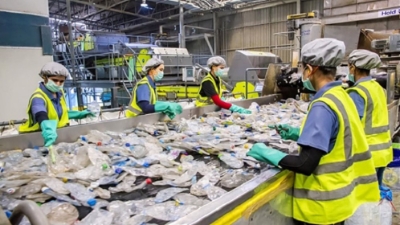
For recyclers, the industry’s biggest challenge is not the availability of plastic waste but the quality of the material entering the recycling stream.
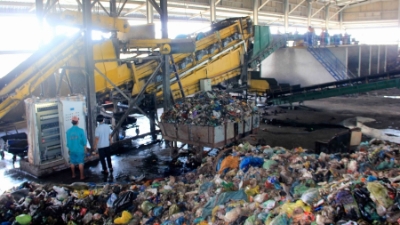
“Vietnam collects a significant amount of plastic waste, but whether that material is suitable for recycling is another question,” said Mr. Minh Nguyen, Feedstock & EPR Development Manager at Vinatic Hai Phong (part of Cedo Vietnam). The company, which processes up to 60,000 tons of plastic annually, has found that inconsistent feedstock quality remains one of the biggest obstacles to expanding domestic recycling. While most of its raw materials are sourced locally through collectors and scrap dealers, much of the material arriving at its facilities still requires additional sorting to remove contaminants and non-recyclable waste. Materials rejected during the process often end up being sent for incineration or landfill.
The quality gap has also created an unusual market dynamic. According to Mr. Minh, imported plastic waste is often cleaner and more consistent than domestically-collected material, even though local feedstock typically commands higher prices. Current regulations also limit how imported recycled materials can be used, highlighting the need to improve both the quality and availability of domestic feedstock.
From the perspective of consumer brands, the challenge extends beyond recycling capacity. Ms. Nguyen Mai Chi, Director of External Relations and Communications at PepsiCo Vietnam Foods, said meeting the company’s recycled content commitments depends on a reliable supply of high-quality recycled resin. PepsiCo launched Pepsi bottles made from 100 per cent recycled PET (Polyethylene Terephthalate) in 2022 and has since expanded the use of recycled PET across more beverage brands. Globally, the company aims to achieve an average of 40 per cent recycled content in plastic packaging by 2035 while reducing virgin plastic use by 2 per cent each year.
Those ambitions, however, rely on access to food-grade recycled plastic. “To recycle plastic into food-grade packaging, you need clean feedstock,” Ms. Chi said, noting that Vietnam’s collection system still relies heavily on the informal sector and lacks sufficient investment in collection and recycling infrastructure.
From collection to community
As efforts to improve feedstock quality continue, companies are shifting their focus upstream, experimenting with new ways to recover plastic before it is lost to landfill.
For Coca-Cola Vietnam, the strategy has been to build an ecosystem of collection partners rather than relying on a single model. Since launching its collection initiative in 2022, the company has nearly tripled the volume of plastic bottles collected, from about 200,000 in its first year to nearly 500,000 today, equivalent to almost 15 tons of recyclable material.
The program combines multiple collection channels. Reverse vending machines (RVMs), developed with partner Botol, allow consumers to return bottles and cans, which are immediately compacted to reduce transportation costs. At the same time, Coca-Cola works with organizations such as the Vietnam Women’s Union to establish community-based collection points, while recyclers including Duy Tan Recycling and Vikohasan process the recovered materials into new products.
One unexpected success has come from Ho Chi Minh City’s metro system. After piloting RVMs at four stations, Coca-Cola found collection volumes significantly exceeded those at schools and residential neighborhoods. Unlike traditional collection points, the Metro stations require little day-to-day staffing, with commuters simply dropping bottles into the machines during their journey. The company is now working with Metro authorities to expand the model and explore additional collection hubs around transit stations.
Beyond physical infrastructure, Coca-Cola sees digitalization as critical to scaling collection. “We cannot do this alone,” said Ms. Bui Duyen Mai, Director, Public Affairs, Communications, and Sustainability at Coca-Cola Vietnam and Cambodia, noting that expanding from a handful of collection points to dozens around the country will require collaboration across the entire value chain.
Meanwhile, Unilever Vietnam has taken a different approach, focusing less on technology and more on building collection systems owned by communities themselves. The company began by supporting Vietnam’s informal waste sector, partnering with VietCycle to strengthen a network that has since grown to around 6,000 waste pickers. But as the initiative evolved, Unilever recognized that improving collection required more than supporting individual collectors, it required creating local systems that communities could sustain long after corporate funding ended.
That thinking led to the launch of a neighborhood-scale Material Recovery Facility (MRF) in Tan My ward, Ho Chi Minh City, built around what Unilever calls the “three Cs”: Community, Connection, and Collaboration.
The local administration provides the land and operates the facility, while Unilever invests in the collection station, which itself incorporates low-value plastic waste into its construction materials.
Unlike many corporate recycling campaigns, the pilot is designed to become financially self-sustaining. Rather than relying indefinitely on company-funded incentives, revenue generated from selling collected recyclables is used to replenish the reward fund. After four months, the center had collected nearly five tons of recyclable materials and evolved into a community hub where families learn about waste segregation and children participate in environmental education activities. Encouraged by the results, the Tan My Ward People’s Committee has already proposed co-investing in a second facility.
Scaling what works
While companies are experimenting with new collection models, the next challenge is turning successful pilots into nationwide systems. For Mr. Ted Toth, Vice President of Global Programs & Circularity at the Alliance to End Plastic Waste, that requires looking beyond individual projects and focusing on the entire recycling value chain.
Rather than starting with waste collection, Mr. Toth argued that circularity begins with end-market demand. Before investing in collection, sorting or recycling infrastructure, the industry must first answer a fundamental question: who will buy the recycled material? The Alliance learned that lesson through projects around the world. In some cases, investments in collection systems, MRFs, and recycling plants produced warehouses full of recycled plastic pellets that had no buyers.
Rather, the Alliance follows what Mr. Toth described as a simple formula: use pilot projects to demonstrate what works, build confidence among governments and investors, attract larger pools of capital, and then scale proven solutions.
Indonesia illustrates that approach. After piloting an integrated waste management system across 12 villages in Malang Regency - including segregated collection, a mini-MRF, and agreements linking recovered materials with recyclers - the Alliance demonstrated that the model could work at the community level. The results attracted support from the Asian Infrastructure Investment Bank (AIIB), which joined the Alliance and the Indonesian Government in mobilizing a combined $210 million to expand the approach to additional cities.
As Vietnam strengthens the implementation of EPR, expands collection infrastructure, and develops new financing mechanisms, the next priority is not launching more isolated projects but creating conditions for proven models to scale. That will require coordinated action across the value chain - from waste generators and collectors to recyclers, consumer brands, investors and government - ensuring that collection, recycling capacity and end-market demand grow together.




 Google translate