


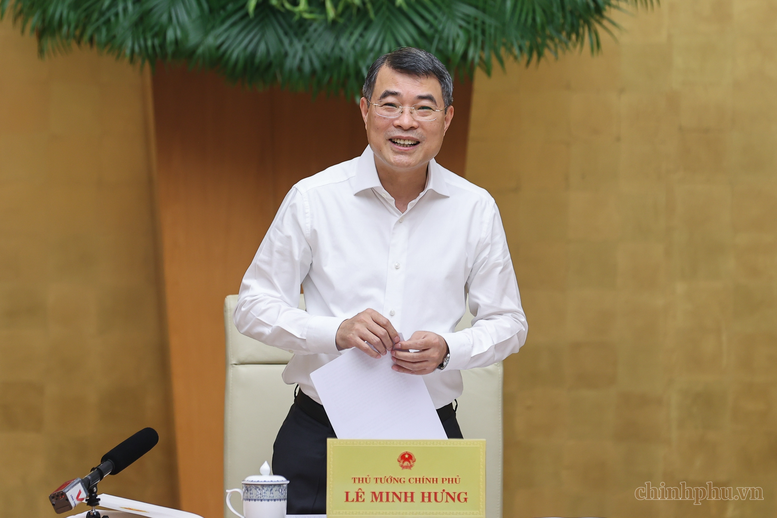
The Government held its regular July meeting in Hanoi on August 3 under the chair of Prime Minister Le Minh Hung.
According to a report to the meeting, Vietnam's macro-economy remained broadly stable during the first seven months of this year, with positive achievements recorded.
As a result, lower food and fuel costs caused a 0.12% drop in July's CPI compared to June figures, thus bringing the seven-month average CPI increase to 4.39% year-on-year. Meanwhile, State budget revenue reached an estimated VND1.83 quadrillion ($70 billion), or 72.5% of the full-year target.
Public investment disbursement through late July hit an estimated VND425.3 trillion, equal to 41.9% of the plan and VND86.8 trillion higher in absolute terms than a year earlier.
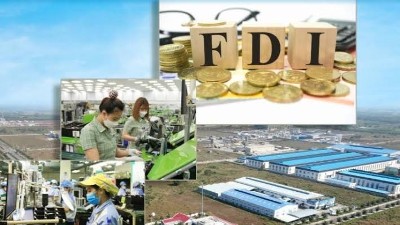
Foreign direct investment remained a standout. Newly registered capital surged 58% to $38.06 billion USD, while FDI disbursement climbed 11.8% to $15.2 billion. Total trade in the first seven months hit an estimated $659.6 billion, a 28.1% annual jump.
The Prime Minister was quoted by the Vietnam News Agency as instructing ministries, sectors and localities to issue or update action plans to follow the Party Central Committee’s third plenum resolutions and conclusions no later than August 10.
The PM ordered ministries, agencies and localities to stick closely to resolutions, agendas and plans, making sure every task is finished on time and to the standard required by the Party Central Committee, Politburo, Secretariat, National Assembly (NA) and Government.
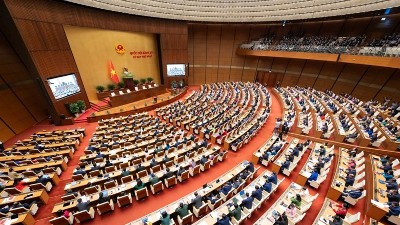
Ministries and ministerial-level agencies must finalize and submit 24 draft laws and resolutions to the 16th NA’s first extraordinary session, plus about 40 drafts for the October session of the NA, along with the necessary guiding documents.
They were also instructed to continue seeking input from competent authorities on major issues and listen to feedback from citizens and businesses when finalizing the drafts.
Lawmakers crafting the Law on Support for Small-and Medium-Sized Enterprises should look at bringing individuals and household businesses under its coverage, creating incentives for them to step up into formal enterprises, especially single-member ones.
Ministries and agencies were told to tighten discipline and speed up the issuance of detailed regulations and enforcement guides for laws and resolutions to prevent any legal gaps.
The Ministry of Justice must urgently prepare the Government’s report on the review of legal documents and submit it to the steering committee before August 15, then to the Government for consideration and to the NA Standing Committee before August 30.
The PM said the Government has so far approved adjustments to the national master plan for 2021–2030, six socio-economic regional plans, 33 out of 34 provincial plans, and 12 of 34 sectoral plans, including the national land use blueprint.
He asked ministers and heads of agencies to complete the formulation and adjustment of the remaining 22 sectoral plans within their remit, targeting double-digit growth and statutory deadlines. All adjustments need to wrap up in the third quarter.
Ministries, agencies and localities must regularly check whether the growth goal is still within reach and roll out effective steps to boost growth while keeping the macro-economy stable and inflation in check.
They were also told to accelerate public investment allocation and disbursement, especially at 10 ministries and agencies and several provinces with low rates, with the goal of hitting 100% of assigned capital. No proposal to return 2026 central budget funds should be made without first reviewing how that might affect the growth target.
He further directed tasks for national defense-security and external relations, while ordering thorough preparations for upcoming diplomatic activities involving Party and State leaders and active planning for APEC Year 2027.
 Google translate