


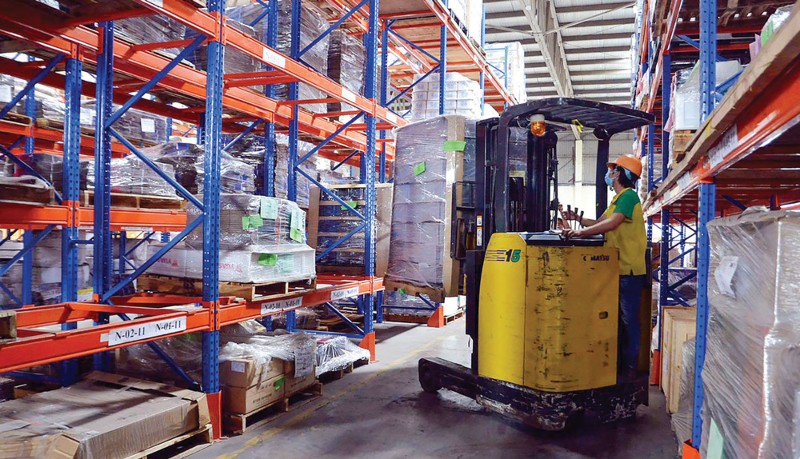
After more than three decades of globalization-driven growth, global production networks are entering a period of profound restructuring. The Covid-19 pandemic, geopolitical conflicts, strategic rivalry between major powers, rising trade protectionism, the green transition, and the rapid advancement of AI have prompted companies to redesign their manufacturing networks to be more flexible and resilient.
The shift extends far beyond relocating factories from one country to another. It involves reallocating higher value-added activities, including R&D, design, data management, and technology development. As a result, low-cost labor alone is no longer sufficient to sustain a country’s investment appeal without accompanying strengths in innovation, technology, and institutional quality.
Where companies once prioritized cost efficiency, they now place greater emphasis on supply chain resilience and security. According to the United Nations Conference on Trade and Development (UNCTAD)’s World Investment Report 2025, FDI is increasingly shaped by industrial policy, economic security, and strategies to develop industries such as semiconductors, AI, batteries, and clean energy, rather than by labor costs alone. Many analysts argue that the world is moving from globalization toward “re-globalization,” with production networks becoming increasingly multi-centered and less dependent on a single location.
Against this backdrop, investment destination criteria are also evolving. Multinational corporations are placing greater weight on workforce quality, innovation capacity, digital infrastructure, logistics, reliable electricity supply, and transparent investment environments. Competition between countries is therefore shifting from offering low-cost manufacturing to creating high-value ecosystems capable of attracting R&D, design, data, and technology development activities.
Drivers reshaping global production chains
While the previous era of globalization was driven primarily by cost optimization, multinational companies are now building investment strategies based on an entirely new set of criteria. Economists have identified three major forces driving this restructuring.
Trade policy is reshaping investment flows
The first driver is the changing trade policies of major economies, particularly the US. Whereas tariffs were once used mainly to regulate trade and protect domestic industries, they are now increasingly tied to industrial policy, economic security, and supply chain restructuring.
Since 2018, the US has imposed additional tariffs on imports from China under Section 301 of the Trade Act of 1974. Following a review in 2024, Washington further increased tariffs on a range of strategic products, including electric vehicles (EVs), batteries, semiconductors, and critical minerals. Tariffs on Chinese-made EVs, for example, were raised to 100 per cent.
As access to the US market becomes an increasingly important consideration, multinational corporations are reassessing their manufacturing footprints. Investment decisions are no longer based solely on labor costs but also on tariff risks, investment stability, free trade agreements (FTAs), and the ability to comply with environmental and labor standards.
According to the OECD, this trend reflects a shift from cost optimization to resilience optimization. As a result, strategies such as friend-shoring and near-shoring are becoming increasingly widespread.
AI is redefining countries’ competitive advantages
If trade policy represents the external driver, AI and automation are the internal forces transforming the nature of global manufacturing.
According to the International Federation of Robotics (IFR), the number of industrial robots continues to rise rapidly, while AI, big data, cloud computing, and the Internet of Things (IoT) are reshaping the entire manufacturing process.
AI is no longer limited to automating individual production tasks. It is increasingly embedded across the value chain, from product design and production planning to inventory management, demand forecasting, quality control, and equipment maintenance, enabling companies to improve productivity while reducing costs.
The McKinsey Global Institute estimates that generative AI could contribute trillions of dollars to the global economy annually, suggesting that competitive advantage will increasingly depend on technological capabilities rather than inexpensive labor.
As robots and AI replace a growing share of manufacturing activities, multinational companies are expected to favor countries with highly-skilled workforces, advanced digital infrastructure, and strong innovation ecosystems. Competition for investment is therefore expanding beyond industrial parks to encompass education quality, research capacity, and workforce development.
Supply chain resilience becomes the top priority
Alongside trade policy and AI, supply chain resilience has emerged as a central consideration in corporate investment strategies.
Disruptions caused by the Covid-19 pandemic, the global semiconductor shortage, the Russia-Ukraine conflict, tensions in the Red Sea, and increasingly-frequent extreme weather events have highlighted the risks of concentrating production in a single location.
Rather than focusing exclusively on minimizing costs, many multinational corporations are building multi-hub production networks spanning multiple countries and regions. The objective is to reduce risk exposure while ensuring business continuity in the face of future disruptions.
Preparing for the next cycle
The restructuring of global production networks is prompting countries to rethink their industrial development strategies. Rather than competing primarily through investment incentives, major economies are focusing on building technology ecosystems to gain an edge in industries expected to drive long-term growth, including semiconductors, AI, robotics, batteries, clean energy, data centers, and advanced materials.
The US has launched large-scale industrial policies aimed at rebuilding domestic manufacturing capacity. The CHIPS and Science Act supports the development of the semiconductor industry, while the Inflation Reduction Act (IRA) promotes investment in EVs, batteries, and clean energy. Together, these measures are designed to reduce dependence on overseas supply chains while attracting strategic technology investments.
The EU is pursuing a similar strategy through the European Chips Act and the Net-Zero Industry Act, which seek to expand production of semiconductors, batteries, green hydrogen, critical raw materials, and clean energy technologies. The goal is to strengthen Europe’s technological sovereignty and long-term competitiveness.
Across Asia, Japan, South Korea, and China are all accelerating investment in AI, robotics, semiconductors, and smart manufacturing. Japan is encouraging companies to reshore part of their manufacturing capacity, while South Korea is reinforcing its leadership in semiconductor production and expanding into AI chips. China continues to invest heavily in advanced technologies to upgrade its manufacturing base. Despite mounting external pressures, it retains significant advantages through its comprehensive industrial ecosystem and vast domestic market.
A common theme across the world’s leading economies is the shift away from relying on low-cost labor and tax incentives toward building innovation-driven ecosystems supported by skilled talent, digital infrastructure, technology companies, R&D capabilities, and robust support industries. As multinational corporations evaluate investment destinations, they are placing greater emphasis on the strength of an economy’s overall innovation ecosystem rather than standalone incentives. As a result, investment in education, science and technology, and digital transformation is becoming an increasingly decisive factor in national competitiveness.
New window of opportunity
Vietnam is among the few economies to have benefited significantly from more than three decades of globalization. Political stability, a strategic location, a large workforce, and a network of 17 FTAs have helped position the country as a key link in regional and global production networks.
Once known primarily for exporting agricultural products and garments, Vietnam has become a major manufacturing hub for many of the world’s leading technology companies, producing electronics, mobile devices, computers, components, precision engineering products, and electrical equipment.
According to the Ministry of Finance and the Foreign Investment Agency, foreign-invested enterprises (FIEs) now account for more than 70 per cent of Vietnam’s total exports while acting as a key driver of industrial growth and international economic integration. These figures underscore the country’s deep integration into global production networks.
The question today, however, is no longer whether Vietnam can continue attracting FDI, but what kind of FDI it will attract in the next phase of development. In the past, success was often measured by the number of investment projects or the total amount of registered capital. Today, those metrics alone no longer reflect the quality of investment. What matters increasingly is whether a project brings advanced technology, establishes R&D centers, develops a highly-skilled workforce, and helps build domestic supplier networks. In other words, the value of FDI is now measured less by the size of the investment and more by its spillover effects across the economy.
Economists argue that multinational corporations will increasingly choose not only where to build factories but also where to establish design centers, technology research facilities, AI development hubs, semiconductor plants, data centers, battery production, and clean energy projects. These knowledge-intensive industries will play a defining role in determining a country’s position in global value chains.
For Vietnam, that means its competitive advantages must evolve to the next level. For many years, competitive labor costs were one of Vietnam’s greatest attractions for international investors. But as AI, robotics, and automation transform manufacturing, the importance of inexpensive labor is steadily diminishing.
The smart factories of the future will likely require fewer production workers but far more engineers, software developers, data specialists, and highly-skilled technicians. This makes it increasingly urgent for Vietnam to strengthen higher education, vocational training, digital skills and the development of a high-tech workforce.
If the country fails to keep pace with technological change, its traditional labor-cost advantage will erode quickly. That is why many experts argue that competition between nations is increasingly a competition for talent.
Another decisive factor is the strength of domestic enterprises. The experience of South Korea, Taiwan (China), and, more recently, Malaysia shows that countries that successfully attract FDI do not stop at becoming assembly bases. Instead, they gradually build domestic companies capable of joining the supply chains of multinational corporations.
Local firms often begin by supplying packaging, basic components, or logistics services. Over time, they move into product design, component manufacturing, advanced materials research, software development, and even co-developing new products. This progression allows a larger share of value-added to remain within the domestic economy.
For Vietnam, this may be the country’s greatest challenge in the years ahead. If local companies cannot integrate more deeply into global supply chains, much of the value created will continue to flow to FIEs. But if Vietnam succeeds in building a robust support-industry ecosystem, it can evolve from a manufacturing base into a regional center for innovation and technology development.
Despite intensifying global competition, Vietnam retains several important advantages. Political stability, a strategic location in the Asia-Pacific region, a domestic market of over 100 million people, an extensive FTA network, and a national focus on science and technology, innovation, and the digital economy provide a strong foundation for the country to deepen its role in global production networks.
New manufacturing era
Recent shifts in the global economy make it clear that the restructuring of global production networks is not a temporary cycle, nor simply the result of trade disputes. It represents a fundamental transformation of the global manufacturing landscape, one in which the factors determining national competitiveness are changing more rapidly than at any point in the past three decades.
For Vietnam, this transition presents a rare opportunity to move up the global value chain. But opportunity alone will not guarantee success. To capitalize on it, the country must prepare strategically. International experience and current trends point to five key policy priorities.
First, Vietnam must shift its focus from the quantity of FDI to its quality. For many years, the number of FDI projects and the amount of registered capital were the primary measures of investment success. Today, those indicators no longer tell the whole story.
The real value of an investment lies not only in its dollar size but in whether it transfers advanced technology, develops skilled talent, establishes R&D centers, integrates local suppliers, and creates new industries. Vietnam’s objective should therefore shift from attracting more investment to attracting investment that generates greater value added.
Second, Vietnam must strengthen its domestic enterprises. The experience of successful economies shows that FDI delivers lasting benefits only when its gains spill over into the domestic business sector.
If Vietnamese companies remain limited to providing low-value services, most of the economic value created by foreign investment will continue to flow overseas. But if local firms can expand into component manufacturing, product design, advanced materials research, software development, and technology, Vietnam will steadily strengthen its position in global value chains.
Third, Vietnam must invest in human capital ahead of technological change. AI, robotics, and automation are rapidly reshaping labor markets. Skills that once provided a competitive advantage may no longer be sufficient in the era of smart manufacturing.
Vietnam therefore needs to modernize higher education, vocational training, and workforce reskilling, with greater emphasis on digital technologies, semiconductors, AI, data science, automation, green energy, and advanced manufacturing. In the long run, investment in people will remain the country’s highest-return investment.
Fourth, Vietnam must build a stronger innovation ecosystem. In the next phase of global competition, a modern industrial park alone will no longer be enough. A competitive economy also requires world-class universities, research institutes, R&D centers, technology companies, venture capital for innovation, and strong intellectual property protection. Together, these elements form the ecosystem needed to nurture new industries and attract high-tech investment. Increasingly, multinational companies are evaluating the strength of an entire innovation ecosystem rather than standalone investment incentives.
Fifth, Vietnam must improve strategic foresight and policymaking. One of the clearest lessons of recent years is that geopolitical tensions, trade policy shifts, and technological breakthroughs can rapidly reshape global investment flows.
Vietnam therefore needs stronger research capabilities, better economic forecasting, and more agile policymaking to keep pace with the evolving global business environment. Closely tracking emerging trends will enable the country to develop more effective industrial strategies, attract higher-quality investment, and integrate more deeply into the world’s emerging value chains.
For Vietnam, the restructuring of global production networks is about far more than attracting new factories or expanding exports. More fundamentally, it offers an opportunity to transform the country’s growth model, from one built on low-cost labor to one driven by knowledge, technology, and innovation.
In this new era, national competitiveness will no longer be measured by the number of industrial parks or the volume of FDI alone. Rather, it will depend on Vietnam’s ability to develop technology, generate knowledge, build globally-competitive domestic enterprises, and capture the highest value-added segments of global production networks. That will be the true measure of sustainable competitiveness in the age of AI and the green transition.





 Google translate