


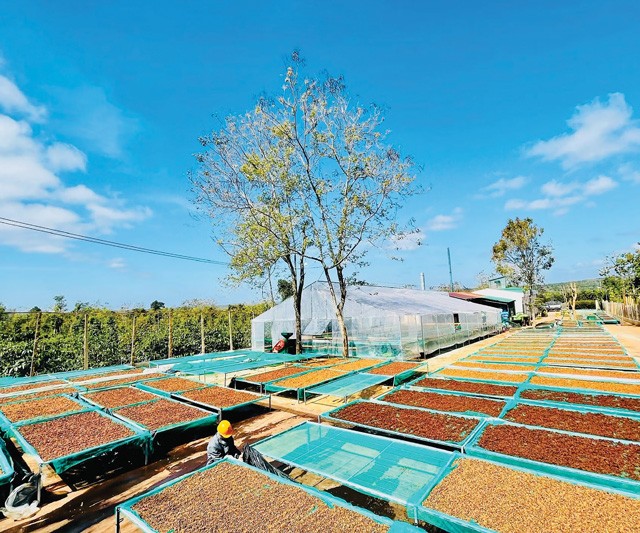
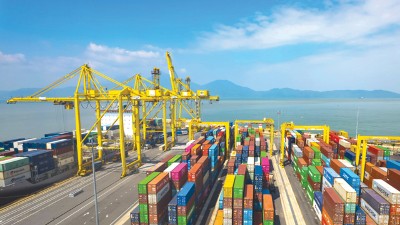
Figures from the Department of Customs at the Ministry of Finance show that Vietnam exported 146,000 tons of pepper worth $950.2 million in the first half of 2026, up 18.5 per cent in volume and 12.1 per cent in value compared to the same period of 2025. The US remained its largest export market.
Data from the US International Trade Commission (USITC), meanwhile, shows that the US imported 40,020 tons of pepper worth $298.6 million in the first five months of the year, up 10.4 per cent in volume and 11.5 per cent in value year-on-year. Vietnam remained by far its largest supplier, shipping 31,950 tons worth $239.73 million, for increases of 36.8 per cent in volume and 35.8 per cent in value. As a result, Vietnam’s share of the US pepper market climbed from 64.4 per cent to nearly 80 per cent by volume and accounted for more than 80 per cent of import value.
Raising quality
The Department of Customs expects pepper exports to the US to remain favorable in the second half of 2026. However, opportunities for further market share gains are likely to be limited given Vietnam’s already dominant position. To sustain growth, the industry will need to ensure stable supply, improve product quality, increase value-added processing, and develop new markets rather than relying primarily on price competition.
Ms. Hoang Thi Lien, Chairwoman of the Vietnam Pepper and Spice Association (VPSA), said Vietnam continues to be the world’s largest pepper exporter, accounting for approximately 36.3 per cent of global supply; well ahead of India (15.8 per cent) and Brazil (15.1 per cent).
The country’s average export price stood at $6,508 per ton in the first half of 2026, while it maintained its competitiveness through production scale and product quality.
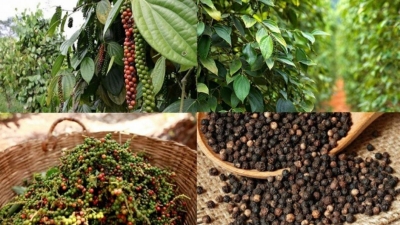
Black pepper remained the industry’s core export, accounting for more than 66.3 per cent of total export volumes. According to the International Pepper Community, the global black pepper market is projected to expand from approximately $3.9 billion in 2020 to nearly $6 billion by 2028. The outlook presents opportunities for Vietnam to expand higher-value products such as pepper-based essential oils for the food, cosmetics, and pharmaceutical industries.
However, growing opportunities are accompanied by increasingly stringent technical barriers. Major import markets, including the EU, the US, and South Korea, are tightening regulations on maximum pesticide residue limits, traceability, and sustainability standards.
In 2025 alone, the EU issued 66 alerts related to pepper and spice products, including six involving Vietnamese products, due to chemical residue or industrial dye contamination.
Mr. Ngo Xuan Nam, Deputy Director of the Vietnam SPS Office, said the development of low-carbon pepper value chains and sustainable production has become a requirement of many importers. International buyers are increasingly demanding not only high-quality products but also transparent sourcing, clear production processes, and compliance with environmental standards.
As a result, Vietnam’s competitive advantage in the years ahead will depend not only on its high production volume but also on transparency and quality control throughout the supply chain, from farms to exports. Expanding regenerative farming models, tightening residue management, and building sustainable value chains are viewed as key strategies for meeting increasingly-demanding international standards.
Mr. Le Viet Anh, Secretary General of the VPSA, said international buyers now look beyond price and quality to examine production practices. Requirements covering traceability, social responsibility, environmental protection, and carbon emission reductions are becoming essential conditions in the global spice supply chain.
According to the International Pepper Community, the global black pepper market is projected to expand from approximately $3.9 billion in 2020 to nearly $6 billion by 2028. The outlook presents opportunities for Vietnam to expand higher-value products such as pepper-based essential oils for the food, cosmetics, and pharmaceutical industries.
Major retailers and food processors in the EU and the US are also implementing environmental, social, and governance (ESG) and net-zero targets across their supply chains. At the same time, compliance with pesticide residue limits, traceability requirements, and certifications such as Organic, Rainforest Alliance, and Regenagri are becoming increasingly important.
Toward low-carbon production
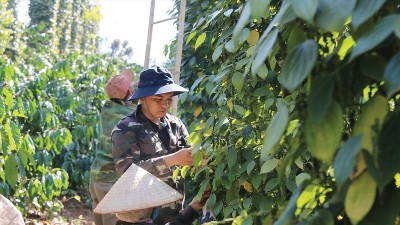
To respond to these changing market requirements, the VPSA has partnered with industry stakeholders to implement sustainable, low-emissions pepper production projects. The initiative is built around four key measures: adopting integrated pest management (IPM) to reduce chemical pesticide use; increasing beneficial microorganisms to improve soil health and control plant diseases; shifting nutrient management toward the greater use of organic fertilizers while reducing inorganic fertilizers; and establishing ecological farming systems with ground cover, shade trees, biological barriers, and buffer zones to enhance biodiversity.
SIMEXCO Dak Lak has introduced a circular farming program aimed at eliminating prohibited substances, reducing fertilizer and irrigation use, increasing farmers’ incomes, and cutting greenhouse gas emissions by around 15 per cent annually. The company is expanding the program to pepper growers this year, with the goal of developing 10,000 regenerative farms.
The VPSA has reported encouraging results in the year since it began implementing four landscape-based pepper production models designed to eliminate chemical residues and reduce carbon emissions. Farms recorded higher populations of beneficial organisms, including ladybugs, spiders, insect-eating birds, frogs, and beneficial microorganisms, while no major outbreaks of pestilence or disease were observed.
Ecological farming practices also proved effective in controlling pesticide residues, reducing export risks associated with food safety standards. Models delivered strong economic performance, generating profits ranging from VND145 million ($5,577) to VND251 million ($9,654) per hectare. Production costs declined by as much as 24 per cent while yields remained stable.
Greenhouse gas emissions at participating farms also fell by 13.5-21.5 per cent compared with conventional practices, driven by the lower use of chemical fertilizers and pesticides as well as more efficient irrigation systems.
These results demonstrate that pepper production can significantly reduce emissions when farmers follow a transition roadmap suited to local conditions, according to the VPSA.
Looking ahead, the Association plans to expand regenerative agriculture models to improve compliance with international standards while strengthening Vietnam’s reputation as a sustainable and responsible supplier of spices. It emphasized, however, that the transition will require coordinated participation across the entire value chain, including farmers, businesses, sustainability organizations, and international buyers.




 Google translate