



Vietnam’s legal framework for the petroleum industry has evolved over several decades alongside the country’s economic transformation. The Law on Petroleum 1993 established the basic legal framework for petroleum exploration, appraisal, and production. It was subsequently amended in 2000 and 2008 before a major overhaul resulted in the Law on Petroleum 2022 taking effect on July 1, 2023.
The government has issued implementing decrees and circulars since the latter incarnation took effect, as well as resolutions addressing difficulties related to the delegation of authority for approving certain petroleum activities. While the Law on Petroleum 2022 is considered one of the country’s more advanced sector-specific laws, with special mechanisms tailored to practical conditions, continued changes in the political, legal and production environment have created a need for further reform toward a Law on Petroleum 2026.

The revision of the Law and the subsequent enactment of amendments are urgent steps to remove institutional bottlenecks and attract investment as production from major fields declines rapidly. By introducing five major policy groups, with a focus on incentives for marginal fields and enhanced oil recovery, the new legal framework is expected to support value-chain development and strengthen national energy security.
Urgent need
From a political and legal perspective, the revision is intended to institutionalize Conclusion No. 76-KL/TW from the Party Central Committee and Resolution No. 70-NQ/TW from the Politburo on ensuring national energy security through 2030, with a vision to 2045. To implement these policies, the National Assembly Standing Committee issued Resolution No. 105/2025/UBTVQH15, requiring the revised law to be submitted to the legislature for consideration and passage at the second session of the 16th National Assembly in October.
The government subsequently issued Resolution No. 81/NQ-CP approving the policies underpinning the revision and assigning the Ministry of Industry and Trade to complete the legislative dossier.
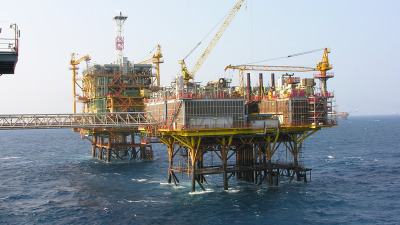
The task is not simply about updating legal provisions. It is an urgent response to current production realities, as existing petroleum fields are experiencing rapid natural production declines. Most major fields were brought into production between 1986 and 2015 and have now been operating for 15 to 30 years, placing them in the latter stages of their productive lives.
At the same time, petroleum exploration in deep and offshore waters is becoming increasingly challenging due to complex geology and sensitive national defense and security and foreign affairs considerations. Global crude oil markets have also experienced greater-than-expected volatility, directly affecting project economics.
Against this backdrop, the Law on Petroleum 2026 is needed to create a sufficiently attractive and competitive investment environment to sustain production and strengthen long-term energy security. The revision would preserve the strengths of the existing law while expanding its scope across the petroleum value chain, from high-tech petroleum services to offshore oil and gas energy, covering onshore areas, islands, and maritime zones under Vietnam’s sovereignty.
Five key policies
The draft Law on Petroleum 2026 is expected to comprise 13 chapters, structured around five key policy groups covering the broader petroleum value chain.
Of these, the first focuses on completing mechanisms for decentralization and delegation of authority, giving implementing agencies greater autonomy and responsibility.
The second focuses on refining regulations governing petroleum contracts and related activities. This includes provisions on extending petroleum contracts and implementing unitization or joint development agreements, which are technically and legally complex issues frequently encountered in production but not previously addressed with sufficient clarity.
Of particular significance, the third group focuses on investment incentives. The draft is expected to allow the government to set corporate income tax and crude oil export tax rates at breakthrough incentive levels, exceeding existing special incentives. The aim is to provide stronger incentives for challenging projects, particularly marginal oil and gas fields and enhanced oil recovery initiatives.
The fourth seeks to develop the petroleum value chain in an integrated manner, including high-tech petroleum services and offshore oil and gas energy. It would connect technical services with energy production while leveraging existing petroleum infrastructure to develop new forms of energy in line with the global energy transition.
And the fifth group introduces a framework for reducing greenhouse gas emissions and deploying carbon capture and storage (CCS) in petroleum operations. Costs associated with storing CO2 within the area covered by a petroleum contract would be treated as reasonable and legitimate costs eligible for recovery under the petroleum contract mechanism. This would allow contractors to meet environmental obligations while maintaining project economics.
Together, the five policy groups reflect a long-term vision for a modern, integrated, and sustainable petroleum industry.
Breakthrough mechanism
To address these obstacles, the Vietnam Petroleum Institute has studied the experience of countries with similar conditions, including Malaysia and Indonesia, which also use production sharing contract (PSC) models.
In Malaysia, following eleven generations of contracts, the country introduced a risk service contract framework in 2011 specifically for fields with reserves of less than 30 million barrels. The framework reduced the corporate income tax rate from 38 per cent to 25 per cent and eliminated export taxes. Malaysia’s newer PSC generations in 2019 and 2020 went further, allocating almost the entire post-tax oil share to cost recovery while maximizing contractors’ share of oil profits.
Indonesia introduced regulations in 2025 that allowed the cost-recovery share to increase by an additional 20 per cent. Policies introduced in 2017 also sought to increase contractors’ share based on the geological, technical, and economic conditions of individual projects.
For enhanced oil recovery (EOR), experience from Malaysia, Indonesia, India, Canada, and the US points to a common approach: reducing resource and corporate income taxes while increasing the share of crude oil allocated to cost recovery to encourage investment in more complex technologies.
Drawing on these experiences, the Vietnam Petroleum Institute and the Vietnam National Industry-Energy Group (PetroVietnam) advised the drafting agency to develop stronger and more specific incentive mechanisms for marginal fields and EOR projects in Vietnam.
One of the most significant proposals in the draft Law on Petroleum 2026 concerns marginal oil and gas fields under contracts already receiving special incentives. Contractors would be entitled to recover 100 per cent of costs after fulfilling their resource tax obligations. Once cost recovery is completed, they would also be entitled to 100 per cent of profit petroleum.
This would represent a major departure from conventional PSCs, under which profit petroleum is shared between contractors and the government.
For marginal fields under conventional PSCs or existing incentive mechanisms, the draft proposes allowing an additional cost-recovery oil share of up to 10 per cent. It also proposes giving PetroVietnam greater authority to directly approve lists of marginal fields and fields requiring continued production. These approvals would provide the legal basis for adjusting field development plans and existing contractual terms.
The potential from undeveloped petroleum fields remains substantial. Of the 80 projects included on the investment promotion list since 2005, only about half have resulted in signed contracts, while the remainder have yet to attract interested partners despite repeated promotion efforts.
Additional EOR incentives, including increasing the cost-recovery ceiling by up to 10 per cent and extending contract terms by up to five years, could therefore be critical to improving the economics of these technology-intensive projects.
Overall, the Law on Petroleum 2026 is expected to create a more open and competitive investment environment, strengthen the ability to attract capital into deep and offshore waters, and support development across the energy value chain. For the first time, breakthrough incentives for marginal fields and EOR would be specifically codified into law. Combined with greater delegation of authority to PetroVietnam, these measures could help accelerate project development.
To realize this vision, relevant authorities will need to promptly issue detailed implementing decrees covering appraisal and approval procedures. This would allow contractors to apply the new framework and bring projects into implementation more quickly, while contributing to State budget revenues and strengthening Vietnam’s long-term energy security.




 Google translate