


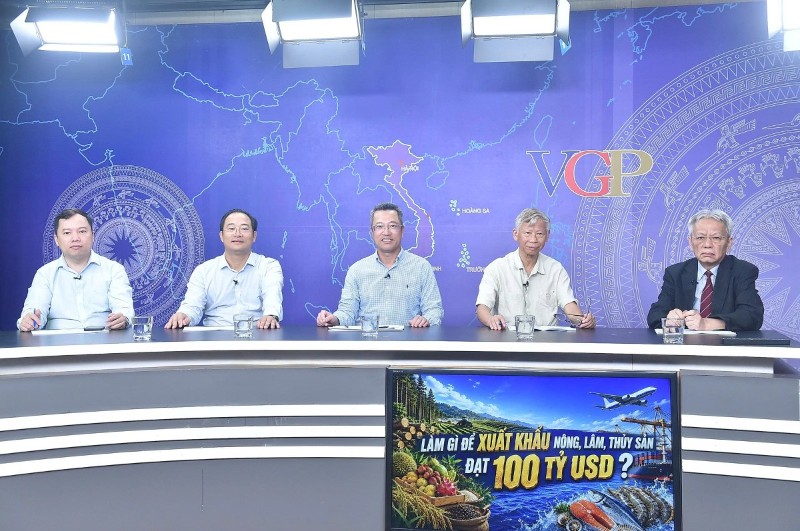
Vietnam’s agriculture, forestry, and fishery sector charts an ambitious course toward a historic $100 billion export milestone by 2027, after surpassing $70 billion in 2025.
Experts at the July 9 seminar “How to Reach $100 Billion in Agri-Forestry-Fishery Exports?” stressed that the target is within reach — but only with bold shifts in mindset and operational transformation. With vast potential yet mounting market headwinds, the industry faces a critical 500-day journey to sustain growth and seize this opportunity.
From a regulatory perspective, Deputy Director of the Vietnam Customs (Ministry of Finance), Mr. Au Anh Tuan, noted that since the beginning of 2026, the Government has issued drastic directives to implement a series of robust solutions.
These include a comprehensive overhaul of administrative procedures, the easing of business investment conditions, and an acceleration of digital transformation. This synchronized reform is expected to serve as a solid "foundation" and a powerful catalyst to propel the sector toward a breakthrough in this pivotal phase.
From a scientific standpoint, Mr. To Nguyen Thanh, a technology expert specializing in traceability, emphasized the vital role of integrating technology into every stage of production and macro-management. He noted that proactive technological adoption would drive a shift in production models, helping both businesses and the Government resolve bottlenecks and turn strategic goals into reality.
Offering a deeper insight, Dr. Nguyen Si Dung, former Deputy Head of the National Assembly Office, asserted that the primary obstacle to be cleared is the economic mindset. He argued that Vietnam must transition decisively from "agricultural production" to an "agricultural economy," prioritizing value creation over mere output volume.
Currently, many of Vietnam’s commodities lead the world in production volume, yet the actual value earned remains low.
"We are not just selling products; we must sell quality, branding, trust, and the story behind the product," Dr. Dung said. "This requires the construction of a synchronized value chain where farmers and fishermen do not work in isolation, but are supported by the participation of every link in the economy."
Proposal for a national Steering Committee
One of the most strategically significant solutions receiving high consensus among experts at the seminar is the establishment of a specialized "National Steering Committee" to realize the $100 billion export goal by 2027.
Currently, agricultural value chains lack effective connectivity because critical components—such as quarantine, laboratory testing, and traceability—fall under public administration and are beyond the capacity of individual farmers or businesses to manage. Consequently, direct State intervention and coordination are considered mandatory.
"This Steering Committee must operate at a national level under the Government’s direct authority, rather than being confined to individual ministries. Coordination must be led by the Government to be truly thorough and effective," said Chairman of the Vietnam Fruit and Vegetable Association (Vinafruit), Mr. Nguyen Thanh Binh.
This high-level body would serve as a "conductor," integrating all commodities and enterprises into a unified value chain. By holding decisive authority, the committee would be able to promptly resolve bottlenecks, creating the momentum for a comprehensive and breakthrough transformation of Vietnam’s agricultural sector.
Mr. To Nguyen Thanh concurred that the Steering Committee should be established at the Government level rather than the ministerial level.
He argued that agricultural export is not a standalone issue for any single ministry; rather, it is an inter-ministerial challenge encompassing the entire export chain, involving agriculture, industry and trade, customs, and other relevant agencies.

 Google translate