


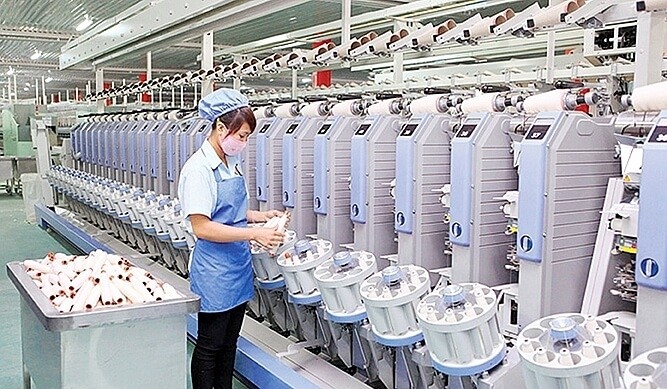
According to the Politburo’s Conclusion No.83-KL/TW, dated August 8, 2026, on the development of materials industry, Vietnam targets to establish at least 3-5 national materials research centers by 2028.
The Conclusion defined materials industry as a foundational industry that plays a decisive role in strategic autonomy, national competitiveness and ability to master core technologies. The industry provides essential inputs and is a prerequisite for developing key sectors and strategic technology products.
Developing the materials industry is a strategic national task that will make an important contribution to promoting rapid and sustainable national development and building an independent, self-reliant and resilient economy, the Conclusion stated.
The Conclusion also emphasized the need to shift from exploiting resource advantages to mastering materials technologies; from broad-based to in-depth development; and from participating in supply chains to gradually mastering high-value-added stages of global value chains. Long-term strategic efficiency, endogenous strength and overall competitiveness should serve as the primary benchmarks.
Strategic minerals must be managed in a unified and rigorous manner throughout the value chain, from exploration and basic geological surveys to planning, extraction, refining, production of applied materials, recycling and strategic stockpiling.
The export of raw minerals should be minimized, while ensuring that national resources are extracted and used economically, efficiently and sustainably, according to the Conclusion.
The Conclusion requested that in 2026, a national strategy for the development of the materials industry through 2030, with a vision to 2045, would be formulated and issued, ensuring consistency and alignment with the orientations set out in the 14th National Party Congress Resolution and strategic resolutions of the Party Central Committee and the Politburo.
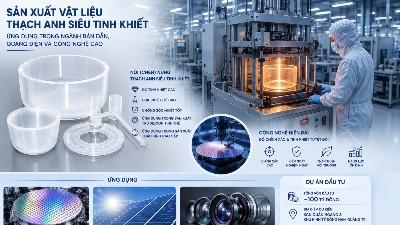
The Conclusion also stressed the need to establish closed-loop materials industry chains, from extraction and processing to deep processing and final applied products, for rare earths; battery materials, magnets and magnetic materials; electronic and semiconductor materials; aluminum, steel, titanium, non-ferrous metals and specialty alloys; chemical materials, fertilizers, carbon materials and dual-use materials, among others.
It requires the establishment of a national database on the materials industry and the completion and interconnection of geological and mineral data in 2027.
By 2030, Vietnam is expected to master a number of deep-processing technologies for rare earths, semiconductor materials and battery materials, while striving to raise the domestic content ratio of certain strategic materials to 50 percent, the conclusion affirmed.
The Conclusion also stated that the materials industry should be developed comprehensively across three groups: basic materials, strategic materials and future materials.
It identified science, technology, innovation, digital transformation and high-quality human resources as the key drivers of the development of the materials industry.


 Google translate