


Sustainable urban development rarely begins with a grand declaration alone. It begins with understanding a place, its climate, its landscape, its people and the ways they have lived with the land for generations. That, Mr. Carlo Negri says, was the starting point for Coastal Quang Ngai, a 94-hectare waterfront community on Vietnam's central coast. Rather than applying a one-size-fits-all planning approach, Sweco drew on a history spanning more than 130 years of designing cities around the world, while spending the last two years studying Quang Ngai's terrain, ecosystems and local culture before putting the first lines of its master plan on paper.
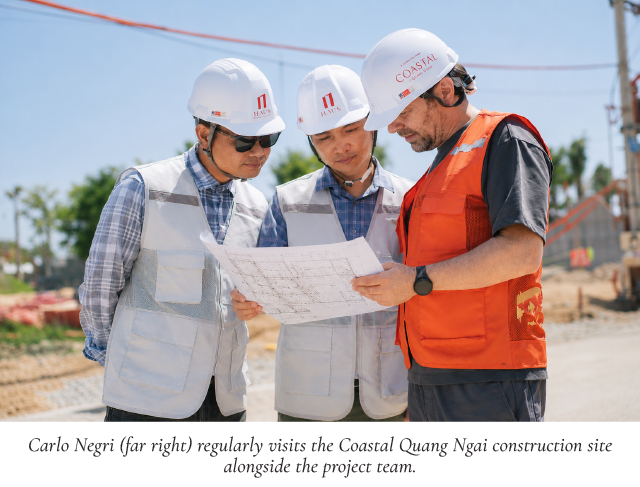
In an interview, Mr. Carlo Negri, Sweco's International Director of Urban Development & Planning, discussed how more than 6 decades of experience designing cities around the world informed a project that, he argues, is intended to reflect Quang Ngai itself rather than reshape it.
With a history spanning more than 130 years, Sweco has worked on urban planning, infrastructure and architecture projects across Europe and beyond. In Vietnam, the firm was selected to lead the master planning of Coastal Quang Ngai – A Community by HAUS. According to Mr. Negri, the work began not with architectural concepts, but with months of field research into local weather patterns, topography, ecosystems and everyday life.
Mr. Carlo Negri: More than two years ago, we began discussions with HAUS about the project. What immediately stood out was that both organizations shared a similar ambition: to create a community that is sustainable in the broadest sense, not only environmentally but socially as well.
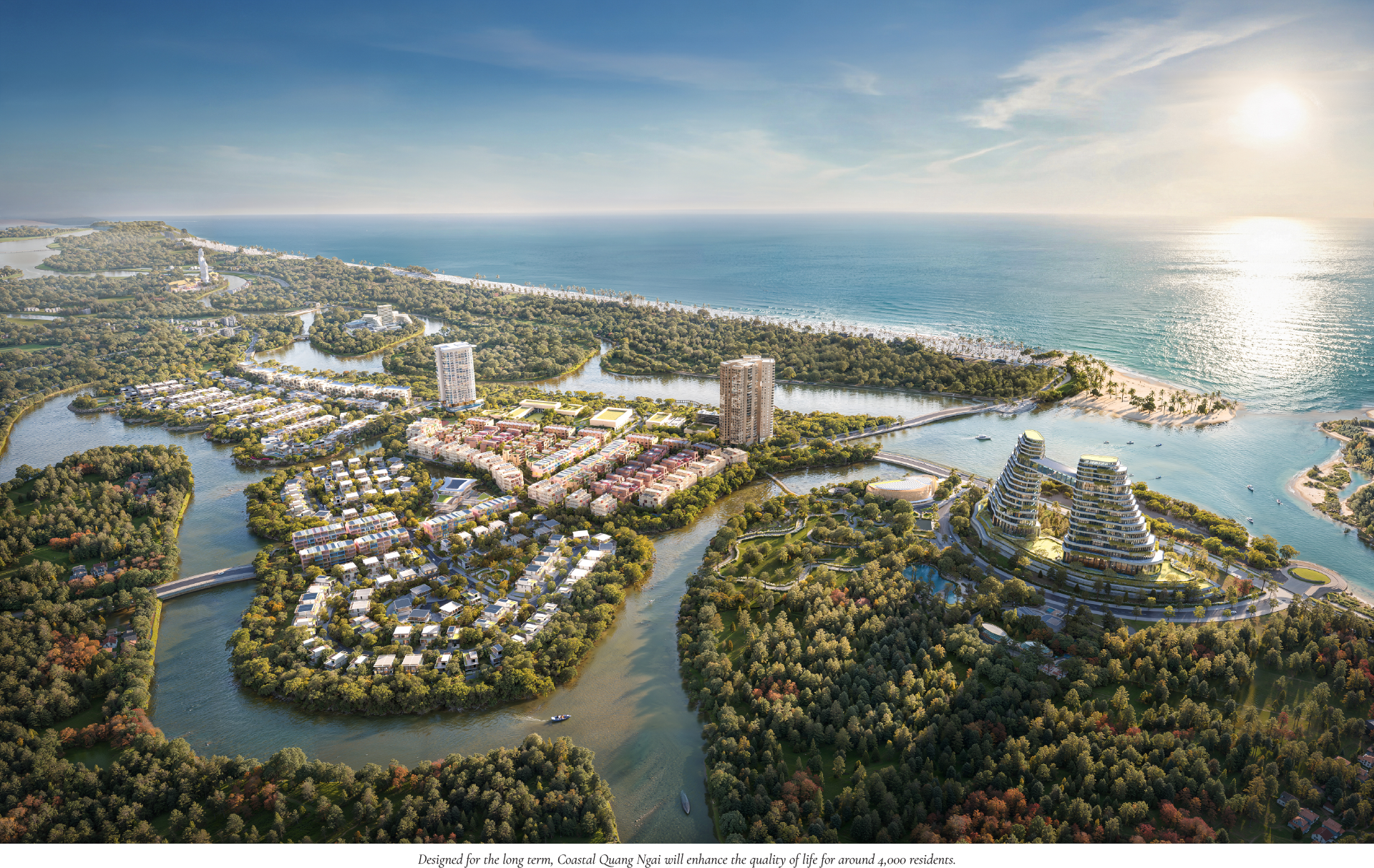
That alignment gave us the confidence to move forward together. Our objective is to help shape a community that can serve roughly 4,000 residents while respecting the ecosystems, cultural traditions and heritage that already define Quang Ngai.
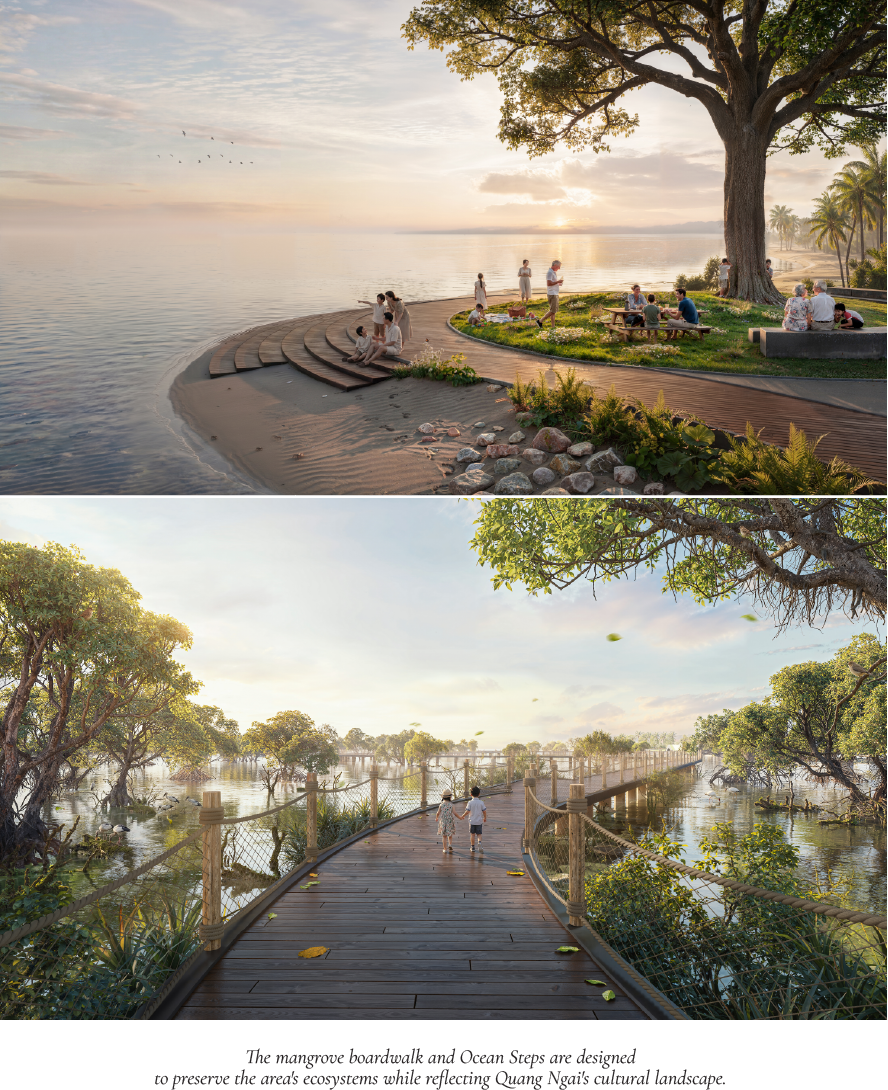
Mr. Carlo Negri: The first time I came to Quang Ngai, I was genuinely struck by its landscape and by its people. We found inspiration here without needing to borrow from another place or another culture. Those qualities already existed. They were the site's greatest assets long before we arrived.
That also made our responsibility clear. The challenge was not to invent an identity for the project, but to ensure those qualities could be expressed through urban development.
We visited the site repeatedly, during periods of heavy rain, high humidity and intense heat, to understand how the landscape responds to different climatic conditions and to develop design solutions accordingly. We also spent time learning about the local community, its cuisine, traditions and cultural heritage.
We were fortunate to work alongside HAUS, a partner with a deep understanding of Quang Ngai and a longstanding commitment to community development and conservation. That local knowledge was indispensable.
Only through careful research, by listening, learning from local partners and combining those insights with the knowledge built over our more than 130-year history, could we design a project of this ambition.
Our objective has been to weave Quang Ngai's identity into every layer of Coastal Quang Ngai, from its architecture and public landscape to its planting strategy and material palette, so residents experience a place that feels unmistakably local while benefiting from the standards of contemporary urban living.
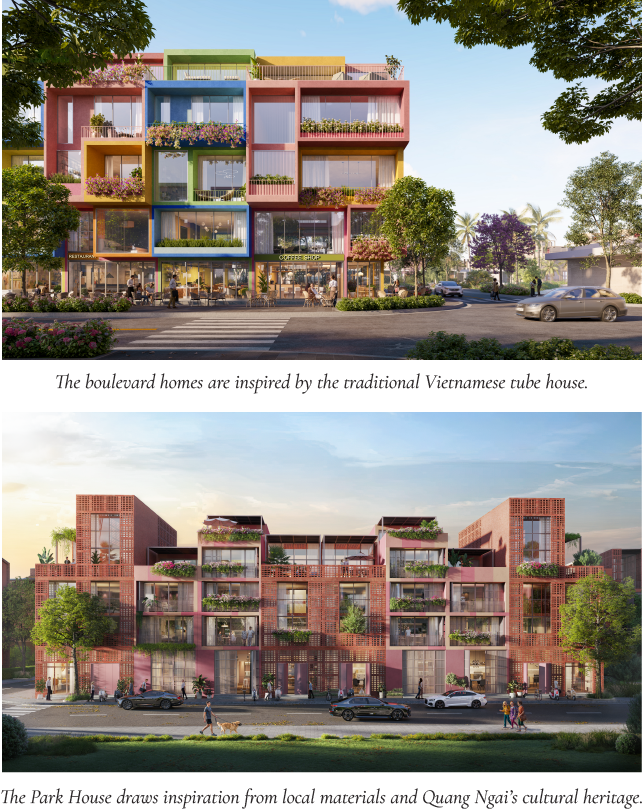
Mr. Carlo Negri: Inclusivity has been one of our guiding principles from the beginning. We never wanted Coastal Quang Ngai to become an isolated residential enclave serving only a select group of people. It should function as part of the wider community, a place that remains open, active and connected to the life around it.
That philosophy is reflected throughout the master plan. The diversity of architectural forms, colours and materials across different neighbourhoods draws directly from Quang Ngai's people, culture and built heritage. Some residential districts, for example, reinterpret the proportions of Vietnam's traditional tube house, not through literal replication, but by translating familiar forms into a contemporary architectural language.
The landscape follows the same principle. Native plant species were prioritised because they are already adapted to the coastal climate, local soils and surrounding ecosystems.
Beyond housing, the development includes recreational spaces and, at its centre, a community exhibition Exhibition Center conceived as the project's social heart, one intended to welcome not only residents but the broader public. The boulevard townhouses and commercial districts have likewise been planned to support local businesses, stimulate economic activity and create employment opportunities for people in the surrounding area.
When we plan a city for tomorrow, sustainability must extend beyond environmental performance. It also means creating a place that is comfortable to live in, supported by efficient transport, clean air, reliable access to energy and water, and infrastructure that remains affordable over the long term.
We are also acutely aware of climate change and of Quang Ngai's increasingly unpredictable weather patterns. That is why resilience became a fundamental part of the planning process. The city's infrastructure must be capable not only of withstanding extreme weather events, but of recovering quickly from them.
Ultimately, all of these decisions serve the same purpose: improving quality of life. Our ambition is for Coastal Quang Ngai to become a place where people can live well, one that supports health, well-being and long-term prosperity.
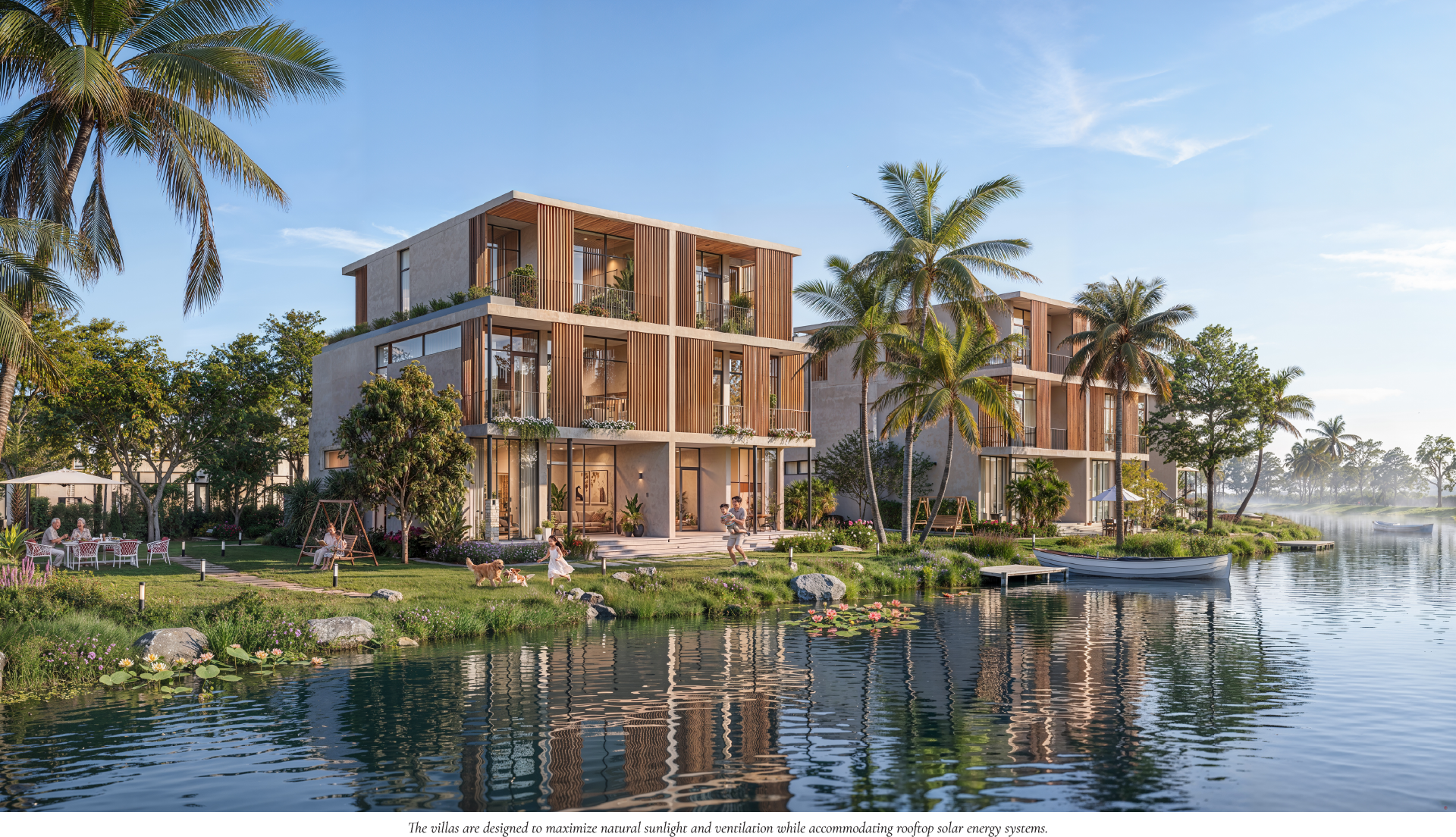
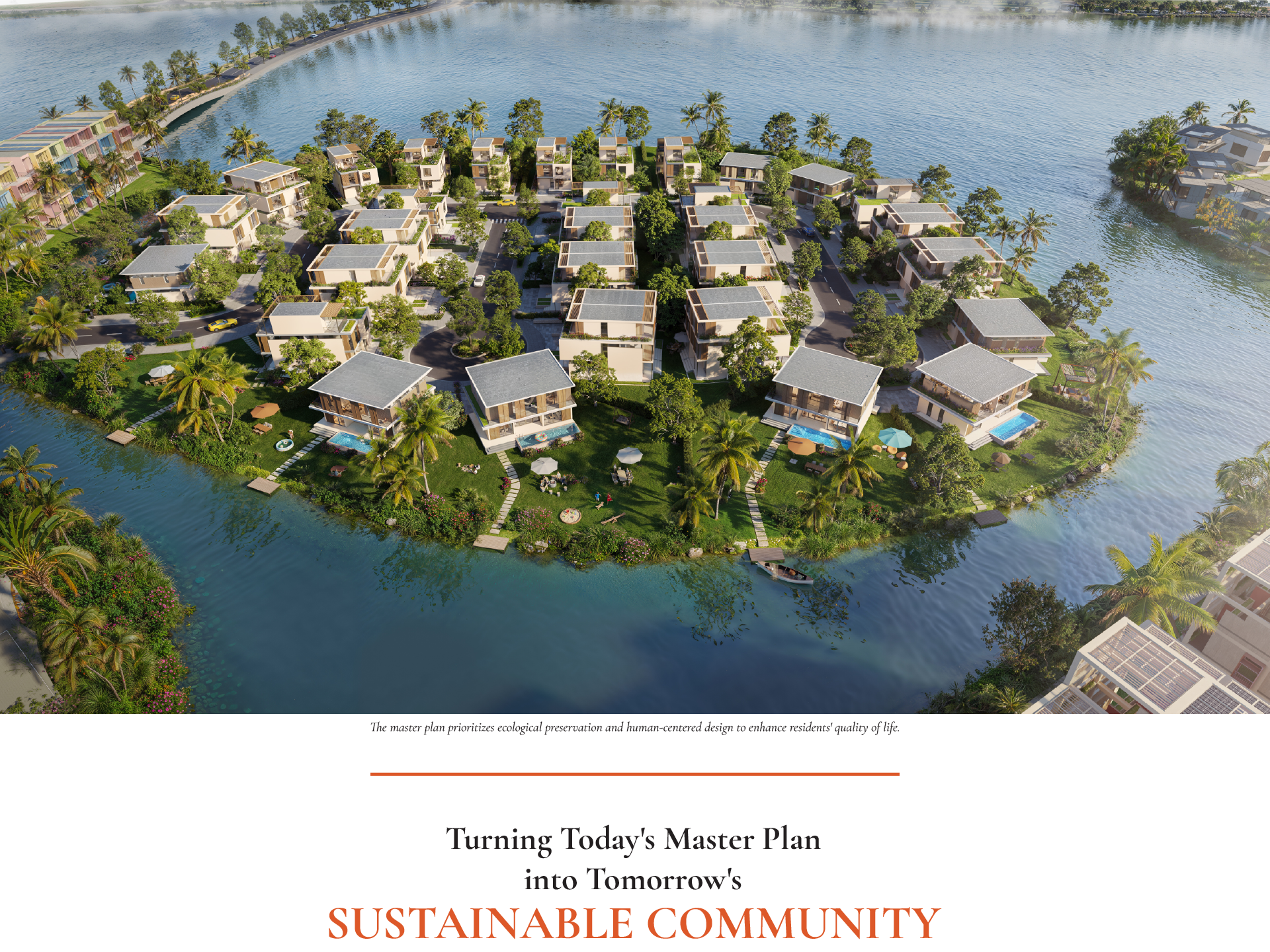
Mr. Carlo Negri: We studied Quang Ngai's weather patterns in detail, including floodwater data from previous storms, to determine safe construction elevations across the development. Rather than relying heavily on conventional engineering infrastructure, our design team sought to work with the landscape itself, using existing vegetation and nature-based solutions to manage stormwater and mitigate flooding.
For Sweco, a truly sustainable development should breathe with its surrounding ecosystem. It should work with nature, not against it, adapting to a changing climate while preserving the lush landscape that already defines this part of the Vietnamese coast.
We also found that Quang Ngai possesses many of the natural advantages needed to support sustainable urban development. The region enjoys abundant sunshine throughout the year, making it well suited for rooftop photovoltaic systems that can help power the community. The homes are designed with passive design principles to maximise natural ventilation, minimising the need for air conditioning while creating a healthier indoor environment. Together, these strategies also help reduce the urban heat island effect and create a more comfortable outdoor environment for both residents and visitors.
Mr. Carlo Negri: It's easy to create slogans. Building a genuinely sustainable city is much harder.
For us, sustainability begins with the master plan itself. At Sweco, architects work alongside specialists in energy systems, environmental engineering, waste management and other disciplines to integrate these considerations into a single urban framework from the outset.
Sustainability cannot be added later as a feature; it has to be embedded in the way a city is conceived. This approach also takes time, this is not instant gratification. Developments like this think about the long term effect and not just the short term gain. They take time to set up and run successfully. We have seen this from our many years of work and experience with Sustainable Urban Development projects. There are no ‘quick wins', successful projects take time.
The scale of Coastal Quang Ngai allows us to take a long-term, holistic approach. Waste generated within the community can be collected, recycled and converted into energy. Many of the systems that make a city sustainable are largely invisible. In many cases, what lies beneath the surface matters even more than what people immediately see.
That includes rooftop solar panels, underground rainwater retention systems integrated into the landscape, and vacuum waste collection systems designed to reduce the number of garbage trucks moving through the community. And therefore reducing pollution and the amount of C02 into the local community and ultimately atmosphere. Residents may never notice these systems in their daily lives, but they are fundamental to the long-term performance of the city.
As architects, our role is to create places where people want to spend time. Architecture should support that ambition. Buildings must shield residents from excessive sun and strong winds while also harnessing natural light and ventilation. It is easy to make a project appear sustainable. The real test lies in the quality of its design. And as architects we must consider not only the architecture but also all of these interwoven urban systems. Architects cannot just be architects in today's age.
Our philosophy has always been human-centred design, creating environments that improve everyday life rather than simply meeting environmental targets.
Material selection is another important part of that approach. We prioritise locally sourced materials wherever possible, reducing transportation distances and, in turn, lowering both embodied carbon and the long-term operational carbon footprint of the development.
Constructing a building is the easy part. The greater challenge is ensuring that it can be operated, maintained and adapted over decades. That requires thinking across the entire life cycle of a project. It is precisely this long-term perspective that has guided our work at Coastal Quang Ngai.
Mr. Carlo Negri: At Coastal Quang Ngai, we have built a long-term partnership with HAUS, and we remain closely involved throughout the project's development.
Sweco's work is guided by the SymbioCity approach, a planning philosophy centred on the integration of urban systems and close collaboration among stakeholders. Creating a sustainable city is never the work of a single planner or a single developer; it depends on bringing together the people who will ultimately shape and inhabit that place.
HAUS and its team, for example, have visited local schools to speak with children and learn how they imagine the places where they would like to live and play. Those conversations matter because today's children will become tomorrow's residents, and their perspectives deserve to inform the community being created today.
Our team also meets regularly with local residents and works closely with government authorities throughout the planning and implementation process. Those relationships are just as important as the technical aspects of the project.
I believe that only through this kind of sustained collaboration can today's stretch of coastline evolve into a vibrant urban community, one that is worthy of becoming a new symbol of Quang Ngai.
Thank you for your time and for sharing your insights.




 Google translate