


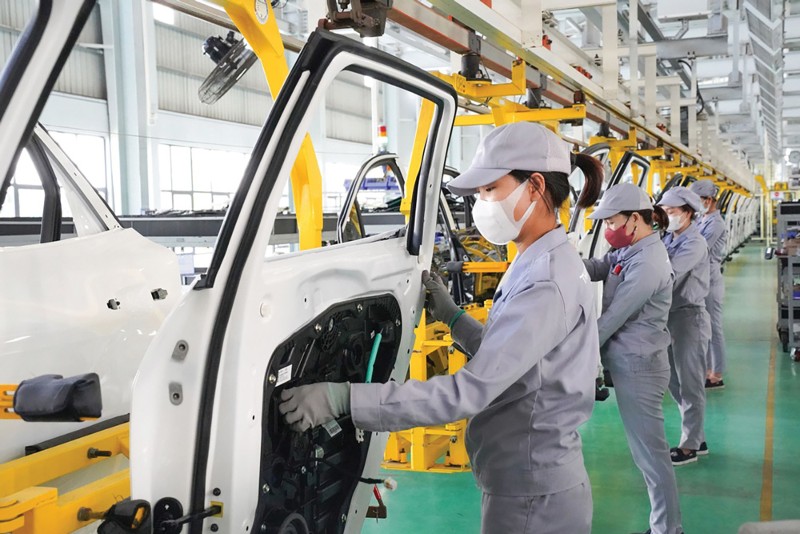
According to PwC’s 29th Annual Global CEO Survey, released in early 2026, business leaders across the Asia-Pacific region ranked Vietnam among their Top 3 preferred destinations for future investment expansion. This shift presents an unprecedented opportunity, particularly in electronics components, high technology, and the semiconductor industry.
Yet Vietnam’s role within these value chains remains modest. After decades of attracting FDI, most domestic companies continue to occupy the lower end of the value chain, performing contract manufacturing and other low-value-added production stages. Despite enjoying significant advantages in flexibility and a young workforce, Vietnam’s support industries still face a formidable challenge in moving beyond contract manufacturing to become Tier-1 suppliers for global corporations.
Three strengths and weaknesses
Mr. Chu Viet Cuong, Director of the Industrial Development Support Center at the Industry Agency under the Ministry of Industry and Trade, summarized the sector’s competitive position as “three strengths and three weaknesses.”
On the strengths side, flexibility comes first. Supported by increasingly modern production systems, Vietnamese manufacturers have reduced their response time for major customers such as Samsung and Toyota from around ten days to just 24 hours.
Second is human capital. Vietnam possesses a young, abundant workforce that has demonstrated a strong ability to absorb advanced manufacturing technologies.
And third is deep international integration. New-generation FTAs, including the EU-Vietnam Free Trade Agreement (EVFTA) and the Comprehensive and Progressive Agreement for Trans-Pacific Partnership (CPTPP), have created both competitive pressure and substantial growth opportunities, encouraging domestic companies to upgrade their capabilities.
Balanced against these advantages are three persistent constraints. The first is technological capability. Most support industry companies are small and medium-sized enterprises (SMEs) that struggle to finance investments in advanced machinery and production equipment.
Second is limited financial capacity. Thin capital resources make it difficult for companies to expand production facilities or upgrade factories to accommodate larger contracts.
And third is poor industrial links. Cooperation between domestic companies, as well as between local suppliers and FDI manufacturers, remains limited, preventing the development of a more integrated industrial ecosystem.
As an FDI company operating outsourced semiconductor assembly and test (OSAT) facilities in northern Bac Ninh province while actively seeking local suppliers, Mr. Chung Won Seok, General Director of Hana Micron Vina Vietnam, said the company has benefited from strong support from both the Vietnamese Government and Bac Ninh authorities. Nevertheless, semiconductor manufacturers continue to face several industry-specific challenges.
One is the implementation of the Global Minimum Tax, which has reduced the effectiveness of traditional corporate income tax incentives.
Reliable electricity is another critical concern. Semiconductor manufacturing requires an uninterrupted power supply, yet voltage fluctuations caused by extreme weather and natural disasters occasionally disrupt operations.
Customs procedures also remain a bottleneck. Semiconductor plants operate continuously throughout the year, but customs clearance during weekends and public holidays has yet to become fully seamless, resulting in shipment delays and higher inventory costs.
Workforce development presents another challenge. While South Korea has more than 40 years of semiconductor industry experience and China around 30 years, Vietnam’s semiconductor sector is only about four years old. Companies therefore shoulder much of the responsibility for training process and equipment engineers.
Shift in mindset
To capture high-quality investment and evolve into Tier-1 suppliers, Vietnamese companies must first confront both their strengths and weaknesses in order to narrow the competitiveness gap as quickly as possible.
From an international market perspective, the EU is now Vietnam’s third-largest export market. Exports to the bloc exceeded $56 billion in 2025, making Vietnam its largest trading partner within ASEAN. However, most exports remain concentrated in contract manufacturing and basic assembly.
Mr. Torben Minko, Vice Chairman of EuroCham Vietnam, likened the relationship between European manufacturers and Tier-1 suppliers to a marriage. “Finding the right local supply chain partner requires both sides to share the same direction and understand each other deeply before entering into a long-term partnership,” he said. “Europe has many laws and regulations, but Vietnamese businesses should not be intimidated by them. These rules reflect the expectations of end-consumers, who are becoming increasingly concerned about sustainability.”

Europe has many laws and regulations, but Vietnamese businesses should not be intimidated by them. These rules reflect the expectations of end-consumers, who are becoming increasingly concerned about sustainability.

There are three essential requirements for Vietnamese companies seeking to enter European supply chains, he continued. The first is sustainability. ESG (Environmental, Social, and Governance) standards have now become a mandatory operating requirement rather than a voluntary initiative.
The second is transparency. Companies must build capable teams with a thorough understanding of international regulations and the ability to collect, manage, and disclose reliable data. The third is long-term commitment. Businesses willing to invest substantial resources while abandoning short-term thinking will be better positioned to become trusted, long-term partners in global supply chains.
Amid these challenges, Hanel PT has emerged as one of Vietnam’s success stories. After 26 years in support industries, the company has established itself as a Tier-1 supplier to leading global manufacturers of sensors and printed circuit boards. Most recently, it signed an agreement with a major US technology company to manufacture equipment for the semiconductor industry in Vietnam, replacing exports from the US to Asian markets.
Sharing the company’s approach, Ms. Tran Thi Thu Trang, Chairwoman and CEO of Hanel PT and Chairwoman of the Bac Ninh Manufacturing Association, said success begins with answering three strategic questions: Where are we going? What are we doing? Who are our target customers?
The company also follows what it calls the “Five-Way Shared Benefit” philosophy, ensuring every product and service creates balanced value for five stakeholders: customers, employees, the environment, the country and society, and, finally, the sustainable growth of the business itself.
The real key lies in readiness, determination to continuously improve, and the long-term vision of business leaders.
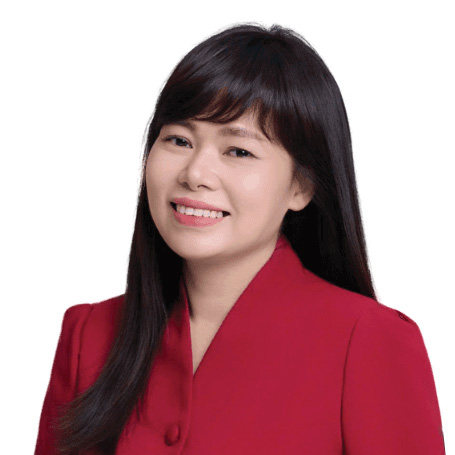
She also attributes Hanel PT’s global competitiveness to its rigorous “10-pillar management wheel,” which encompasses quality, delivery, cost, people, technology, safety, social responsibility, environmental management, R&D, and after-sales service.
She stressed that quality is non-negotiable. Competing on price alone is impossible without thousands of standardized processes that ensure consistent quality control. Companies must guarantee product stability, effectively manage delivery risks, provide large-scale production at globally-competitive prices, continuously improve technology and workplace culture, and establish rapid customer response systems, responding within five minutes of customer contact, investigating abnormalities within 30 minutes, and being prepared to travel overseas immediately when direct negotiations are required.
Overarching all ten pillars, Ms. Trang said, are governance - the “G” in ESG - and a strong corporate culture, both of which are essential to building lasting trust with global partners. “The journey to becoming a Tier-1 supplier has never been easy, and access to capital is not the first deciding factor,” she explained. “The real key lies in readiness, determination to continuously improve, and the long-term vision of business leaders.”


 Google translate