



Retail sales of goods and service revenues are a major driver of Vietnam’s GDP growth, accounting for more than 60 per cent of the economy. Retail alone contributes around 70-72 per cent of that figure, with the remainder coming from services. While this reflects continued growth in consumer spending, purchasing power remains constrained as households continue to save rather than spend.
Achieving double-digit economic growth will require stronger performance in this indicator. Retail is approaching its growth ceiling, now accounting for about 75 per cent of total retail sales and service revenues, leaving limited room for further expansion. By contrast, the services sector continues to grow at a relatively slow pace. Without accelerating services, it will be difficult to lift overall economic growth to a higher level.
In addition to demand-stimulus measures such as trade promotion, the “Vietnamese People Prioritize Vietnamese Goods” campaign, digital transformation, and green communication initiatives, I believe the key to retail growth lies in expanding retail outlets. New points of sale are essential to creating new growth drivers, as the existing retail network has largely reached saturation. At the same time, every effort should be made to stimulate service industries, including banking and finance, food and beverages, and tourism.
To effectively boost domestic consumption, the government should prioritize the following measures.
First, urgently issue a comprehensive decree to establish a unified regulatory framework for the distribution system, covering both domestic and foreign-invested enterprises. Vietnam still relies on a 2003 circular governing supermarkets and shopping centers, drafted when the modern retail sector was still in its infancy. The market has since evolved significantly, with a wide range of retail formats, particularly e-commerce, yet the regulatory framework remains fragmented across multiple legal documents.
Second, revise incentive policies for the trade and services sectors. Current incentives are too limited, making it difficult for businesses to invest in commercial infrastructure and logistics, raising costs and reducing competitiveness. Vietnam should also develop wholesale markets that meet regional and international standards to better connect agricultural production with domestic distribution and export markets.
Third, strengthen the development of a highly-skilled workforce for the retail, services and e-commerce sectors. The shortage of qualified personnel is directly affecting business performance across the retail industry.
Fourth, establish a national supply and demand database for goods that can be integrated with retail systems. At the same time, improve market forecasting and regulatory capacity to help contain inflation and stabilize prices.
Fifth, complete a transparent legal framework for e-commerce and omnichannel retail business models.
Sixth, accelerate the development of financial services. The government should move more quickly to pilot open economic zones, creating stronger momentum for the services sector to expand and become a more significant contributor to economic growth.
* * *

To achieve double-digit economic growth, Vietnam needs to transform its growth model by focusing on productivity-driven, high-quality growth rather than extensive expansion. The electronics industry can no longer rely solely on expanding investment or stimulating demand. Instead, it must improve labor productivity, increase value-added, and raise localization rates. I would like to propose six key priorities.
First, manufacturing businesses must become the centerpiece of growth policies. The government should accelerate administrative reforms, particularly in areas such as land approvals, value-added tax (VAT) refunds, certificates of origin (C/O), specialized inspections, and access to financing. In the electronics industry, where product cycles and orders are extremely short, even a delay of a few weeks in expanding a factory or importing equipment can result in investment and orders shifting to another country.
Second, Vietnam should fully capitalize on the global supply chain restructuring that has accelerated since the pandemic and amid ongoing geopolitical tensions. The country has attracted leading technology companies such as Qualcomm, Nvidia, and Marvell, not only because of its competitive labor costs but also because of the potential of its industrial ecosystem. To sustain FDI, Vietnam must strengthen the capabilities of domestic enterprises so they can become competitive partners. At present, many Vietnamese companies remain in a weak bargaining position, leaving them vulnerable to price pressure and the loss of contracts.
Third, achieving rapid growth while keeping inflation under control requires significant gains in labor productivity through high-quality workforce training and greater investment in AI, automation, and smart manufacturing. The government should simplify procedures for importing machinery and equipment and improve businesses’ access to financing so they can confidently invest in medium and long-term projects.
Fourth, manufacturing and processing companies are not short of orders but lack access to the medium and long-term capital needed for deeper investment. Vietnam must move up from lower-value manufacturing into mid and higher-value segments to strengthen its position in global supply chains. This transition will only be possible if investment capital becomes more accessible.
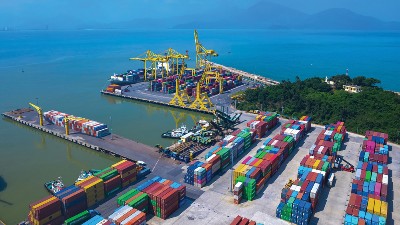
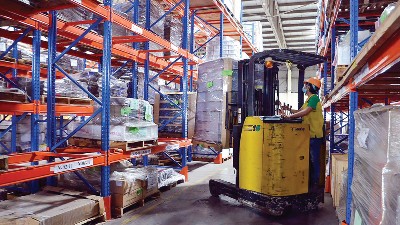
Fifth, Vietnam should take more decisive action to reduce logistics costs, creating greater room for businesses to expand and supporting stronger economic growth.
Sixth, the government should urgently establish a special task force as early as this month to promptly resolve challenges facing manufacturing and export-oriented enterprises. With representatives from the Ministry of Finance, Ministry of Industry and Trade, Ministry of Science and Technology, the State Bank of Vietnam, and key industrial cities and provinces, the task force would serve as a centralized mechanism for quickly removing regulatory and operational bottlenecks faced by businesses.
* * *
Since US President Donald Trump began his second term, US trade policy has become increasingly consistent through the broad application of reciprocal tariffs. Unlike previous approaches that focused primarily on a handful of countries, such as China, the current policy is global in scope, putting pressure on trading partners to proactively engage in bilateral negotiations with the US.
Recent developments suggest these measures have been carefully designed to withstand legal scrutiny. For example, after the US Supreme Court struck down the 20 per cent tariff imposed on Vietnamese goods, the Trump administration immediately invoked Section 232 to maintain a 10 per cent tariff for 150 days while preparing follow-up measures once that period expires.
As part of this process, the US launched a comprehensive investigation on March 23, 2026. The investigation culminated in the US Department of Commerce announcing new tariffs under Section 301 on July 23. The review focused on three key issues: forced labor, industrial overcapacity, and intellectual property protection. Among the 60 economies examined, only about 17 received the preferential 10 per cent tariff rate. Vietnam was not among them.
For the EU, Japan, South Korea, Sweden, and Taiwan (China), the US applies tariffs based on the difference after accounting for the Most Favored Nation (MFN) tariff rate. It has also established a special tariff-rate quota for Bangladesh, Cambodia, Indonesia, and Malaysia, to encourage greater imports of US cotton.
Vietnam is in a particularly disadvantaged position. It was the largest importer of US cotton in 2025, purchasing more than $1.3 billion worth, while imports increased by about 25 per cent in the first half of 2026. Despite this, Vietnam was excluded from both the preferential quota program and the 10 per cent tariff rate.
Among the ten largest textile and apparel exporters to the US market, Vietnam ranked second in 2025 with exports of $18.4 billion, accounting for around 40 per cent of the country’s total textile and apparel exports. Yet seven of the Top 10 exporting countries qualify for the 10 per cent tariff rate, while Vietnam faces a 12.5 per cent tariff, making it one of the most disadvantaged exporters alongside China and Türkiye.
In light of these challenges, I would like to propose three priorities to safeguard the interests of Vietnam’s textile and apparel industry. First, the government should intensify bilateral negotiations with the US, leveraging Vietnam’s position as its largest cotton export market. Second, Vietnam should quickly complete and implement a transparent legal framework, supported by clear enforcement policies, to address concerns related to forced labor and eliminate existing misconceptions. Third, Vietnam should proactively demonstrate the origin of its raw materials.
* * *

E-commerce has expanded at roughly three-times the pace of Vietnam’s GDP over the past eight years. Maintaining double-digit growth is therefore not a challenge for the industry. However, that alone will not be enough to achieve the national target of raising the digital economy’s contribution to 30 per cent of GDP by 2030. As e-commerce is expected to become one of the key drivers of the digital economy, the sector is now facing a new set of challenges.
One of the most immediate concerns is rising business costs as major e-commerce platforms increase their service fees. At the same time, a series of new regulations, including the Law on E-commerce and its implementing decrees, have come into force, while many household businesses and individual sellers have yet to fully understand the new requirements. Digital platforms and businesses are also facing significantly higher compliance costs.
We therefore recommend measures to reduce regulatory compliance costs for businesses, alongside stronger guidance and training to help household businesses and individual sellers comply with the new legal framework.
Vietnam aims to add at least 1 million new businesses by 2030, meaning around 200,000 household businesses and individual entrepreneurs will need to transition into formal enterprises each year. The e-commerce sector alone currently includes about 3 million household businesses and 2 million individual sellers. If this transition is to succeed, the process must be significantly simplified.
The rapid advancement of AI also presents a new challenge for the e-commerce sector. We believe Vietnam could soon face an “AI trade deficit,” as most household businesses and individual sellers will increasingly rely on AI tools to operate their businesses but lack the knowledge needed to use them effectively and cost-efficiently. At present, Vietnam still lacks comprehensive standards, technical guidelines, and best practices for AI adoption. Without clear direction, businesses risk wasting resources and driving up costs through inefficient use of AI technologies.
The Vietnam E-commerce Association therefore hopes to receive stronger support from government agencies, particularly the Ministry of Science and Technology, in developing practical AI adoption models. These models would not only support the transition from household businesses to formal enterprises but also help optimize technology investment, enabling the sector to sustain higher growth and make a greater contribution to Vietnam’s digital economy.
At the same time, the rapid expansion of e-commerce has been accompanied by a rise in regulatory violations. Livestream selling is one example, with many sellers entering the market without formal training, leading to statements that violate regulations, break the law, or damage the rights and reputations of organizations and individuals. It is therefore increasingly urgent to establish comprehensive standards, technical guidelines and codes of conduct, and professional ethics for the sector.
E-commerce is an industry that requires supportive public policies and government investment. It will be difficult to achieve broad-based progress if household businesses and individual entrepreneurs are left to navigate these challenges on their own. By addressing barriers related to compliance costs, business formalization, AI adoption and industry standards, Vietnam can unlock the sector’s full growth potential and strengthen its contribution to the goal of having the digital economy account for 30 per cent of GDP by 2030.
* * *

Fertilizer is among the most critical of agricultural inputs, playing a decisive role in improving productivity, product quality, and overall farming efficiency. However, amid growing global economic and geopolitical uncertainty, fertilizer producers and distributors in Vietnam are facing mounting challenges.
One of the most pressing issues is access to raw materials. Many countries have introduced protectionist measures to prioritize domestic businesses and agricultural production, making it increasingly difficult for Vietnamese manufacturers to import the inputs needed for fertilizer production. This has raised production costs and weakened the competitiveness of domestic enterprises.
The fertilizer industry serves the agricultural sector directly, yet the current value-added tax (VAT) framework remains inadequately aligned with that role. The Vietnam Fertilizer Association therefore continues to advocate revisions to the Law on VAT as it applies to fertilizer products. Last July, the National Assembly approved a 5 per cent VAT rate for fertilizers. However, given their importance to agricultural production, we urge the government to consider reducing the VAT rate to zero. Such a move would lower production costs for farmers while strengthening the competitiveness of both Vietnam’s agricultural sector and its fertilizer industry.
We also recommend amending the Law on Standards and Technical Regulations to better reflect current production conditions. The Association has repeatedly raised this issue, as the quality of certain domestic mineral resources continues to decline. With appropriate standards and greater application of science and technology, Vietnam could make more effective use of available domestic resources while continuing to meet fertilizer production requirements.
At the same time, we hope the government will continue simplifying administrative procedures related to the implementation of these laws. More transparent and streamlined procedures would reduce compliance costs and allow businesses to focus more resources on production and business development.
Finally, I would emphasize that fertilizer manufacturing is a technology-intensive industry. While some large companies have been able to adopt advanced technologies, many smaller enterprises continue to face significant barriers. We therefore hope the government will continue introducing policies that improve access to new technologies, encourage innovation, enhance productivity and product quality, and strengthen the long-term competitiveness of Vietnam’s fertilizer industry.
* * *

Vietnam’s exports of wood and wooden products reached approximately $11.1 billion in the first seven months of 2026, up 5 per cent from a year earlier. However, exports of finished wooden furniture - the industry’s highest value-added segment - fell 6.2 per cent year-on-year. The decline was driven largely by weaker performance in the US market, where exports totaled about $4.2 billion, well below levels recorded in recent years.
In addition to softer consumer demand, Vietnamese wood and wooden product manufacturers are facing mounting pressure from an increasingly complex US tariff regime, including overlapping duties on the same products. Wood exports are currently subject to tariffs under both Section 301, which addresses unfair trade practices, and Section 232, which is based on national security considerations and has been in effect since late 2025.
Under Section 232, a 25 per cent tariff currently applies to three key product categories: kitchen cabinets, bathroom vanities, and upholstered seating. The US has also warned that the tariff could increase to 50 per cent beginning January 1, 2027.
Vietnamese exports are also subject to a temporary 10 per cent import surcharge under Executive Order 122. Once that measure expires on August 23, products are expected to transition to Section 301 tariffs, with a projected rate of around 12.5 per cent.
The industry has also been hit by a recent preliminary finding from the US Department of Commerce, announced on July 21, proposing combined anti-dumping and countervailing duties of up to 132.6 per cent on hardwood plywood imports from Vietnam.
Against this backdrop, businesses are looking to the ongoing negotiations between the Vietnamese and US Governments for a positive outcome, particularly as US authorities continue investigations into industrial overcapacity and intellectual property issues.
On the domestic policy front, the Vietnam Timber and Forest Products Association recommends reviewing Vietnam’s export tax on sawn timber. The current 25 per cent export tax was originally introduced to protect domestic plantation timber resources. However, Vietnam now imports about 6 million cubic meters of timber annually, suggesting that the policy should be reassessed. Revising the tax could help create more jobs while encouraging greater imports of US timber, thereby contributing to a more balanced bilateral trade relationship.





 Google translate