


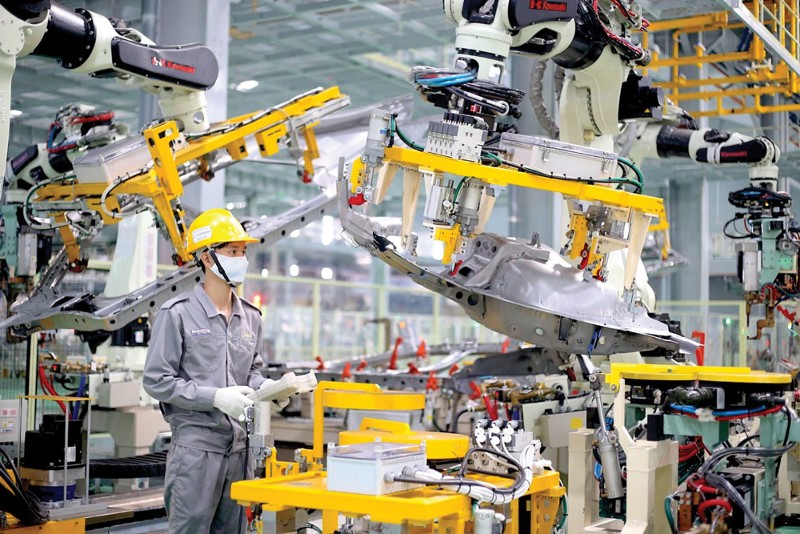
Vietnam’s labor market has long been assessed through familiar indicators such as employment, unemployment, and average incomes. In the aftermath of the Covid-19 pandemic, the overriding priority was to restore jobs, help businesses resume operations, and bring workers back into the workforce. Those objectives have now largely been achieved.
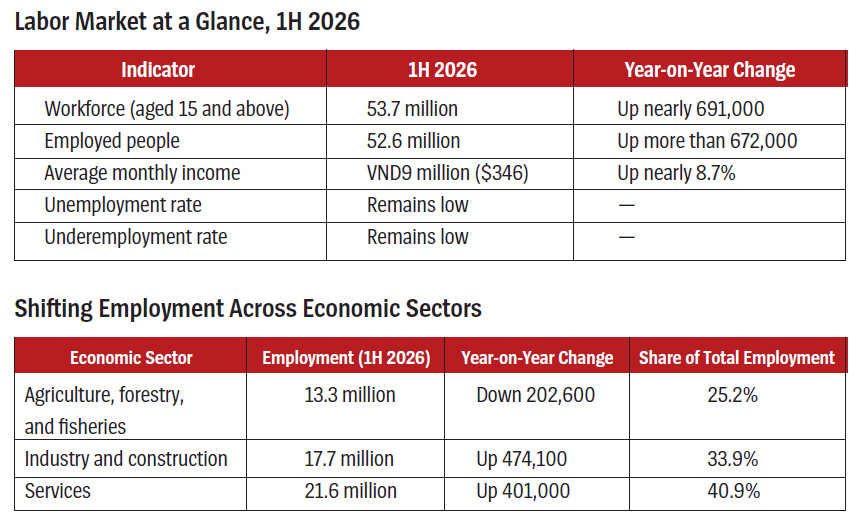
Data for the first half of 2026 show continued growth in the workforce and employment, rising worker incomes, and persistently low unemployment.
Yet focusing solely on headline growth figures risks overlooking a more significant transformation unfolding beneath the surface: labor is increasingly shifting from low-productivity sectors into manufacturing, services, and the digital economy.
At the same time, employers are changing their hiring priorities, placing greater emphasis on skills and workforce quality. Together, these trends suggest Vietnam’s labor market is gradually adapting to the evolving needs of a new phase of economic development.
Quality over quantity
Speaking at a July 3 press conference announcing second-quarter and first-half 2026 socio-economic data, Ms. Nguyen Thi Huong, Director General of the National Statistics Office (NSO) at the Ministry of Finance, said Vietnam’s workforce aged 15 and above reached approximately 53.7 million people in the first half of the year, up by nearly 691,000 from a year prior. Employment rose by more than 672,000 to around 52.6 million people, while the average monthly income climbed to approximately VND9 million ($346); an increase of nearly 8.7 per cent.
Both unemployment and underemployment remained at low levels. The figures indicate that the labor market’s recovery has remained resilient as the economy continues to expand, business activity gains momentum, and corporate confidence improves.
Compared with the 2022-2024 period, when restoring employment after the pandemic was the primary objective, the labor market in 2026 has entered a different stage. The focus is no longer simply on creating more jobs, but on improving job quality, raising incomes, and increasing labor productivity.
That shift is reflected in the nearly 9 per cent increase in workers’ incomes. Beyond signaling stronger business performance, the increase suggests that the value generated by labor is rising. Higher incomes also provide an important foundation for strengthening domestic consumption and supporting broader economic growth. The improvement has been underpinned by continued expansion in industrial production, strong trade performance, new investment projects, and a steady rise in newly-established businesses.
More importantly, the gains extend beyond employment numbers to the quality of jobs being created. Workers are gaining access to positions that offer higher pay, better working conditions, and greater value-added. This coincides with the government’s stronger push to promote private sector development, innovation, science and technology, digital transformation, and productivity growth.
Many economists believe Vietnam’s labor market is entering a new stage of development, where the emphasis is shifting away from creating jobs at any cost toward generating more productive, higher-paying employment aligned with the country’s long-term growth strategy.
Skills for the future
Employment data by sector also points to a clear structural shift during the first half of 2026. Employment in agriculture, forestry, and fisheries declined by 202,600 year-on-year to 13.3 million workers. Meanwhile, employment in industry and construction increased by 474,100 to 17.7 million, while services added 401,000 workers to reach 21.6 million. As a result, services accounted for 40.9 per cent of total employment, industry and construction represented 33.9 per cent, and agriculture’s share fell to 25.2 per cent.
This represents more than a numerical redistribution of workers. It reflects a broader restructuring of Vietnam’s labor market in line with the country’s industrialization, modernization, and expansion of the digital economy.
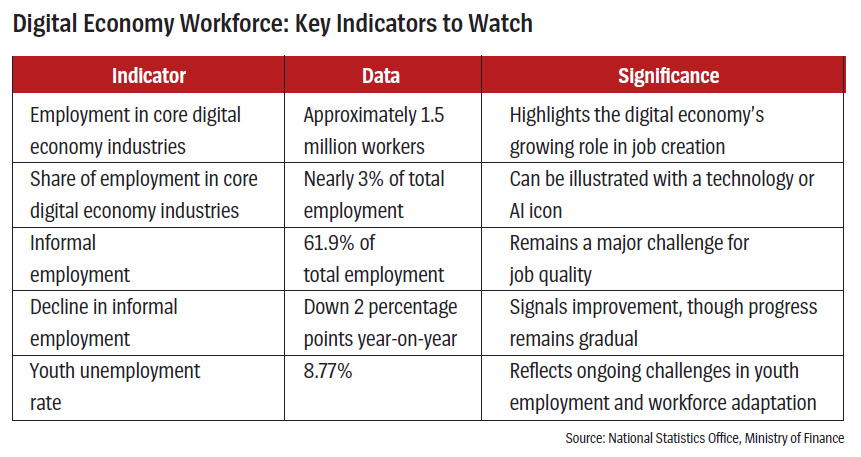
According to the NSO, employment in core digital economy industries has reached approximately 1.5 million workers, accounting for nearly 3 per cent of total employment and marking a significant increase from previous years. The growth highlights how digital transformation is directly generating higher-value, higher-quality jobs while contributing to productivity gains across the economy.
Another notable change is the evolving demand for talent. While Vietnam’s competitive advantage once rested primarily on low labor costs, businesses are increasingly prioritizing digital capabilities and technological proficiency, particularly the ability to apply AI.
Many office, management, marketing, and even manufacturing positions now expect employees to use AI tools to improve productivity. AI is rapidly becoming a new foundational workplace skill, much as computer literacy and foreign language proficiency became essential in previous decades.
At the same time, the restructuring process underscores the need to ensure that no segment of the workforce is left behind. Though digital skills and AI capabilities are becoming increasingly valuable, informal workers still account for 61.9 per cent of total employment, despite declining by 2 percentage points from a year earlier. Youth unemployment also remains relatively high at 8.77 per cent, highlighting the continuing challenge of creating quality employment opportunities and helping young workers adapt to changing labor market demands.
These figures reinforce the importance of expanding reskilling programs, strengthening digital skills training, and supporting career transitions so that workers can keep pace with technological change while providing businesses with the skilled workforce needed for a new growth model.
Vietnam’s labor market is already showing the early signs of a broader structural transformation. On July 8, Party General Secretary and State President To Lam met with the Ministry of Home Affairs and called for the development of a modern, transparent, flexible, and internationally-integrated labor market. He emphasized the need to shift Vietnam’s competitive advantage away from low-cost labor toward high-quality human capital. The ongoing changes in employment structure, workforce skills, and employer demand all point to the need for a labor market that is better aligned with the country’s next stage of development.
Looking ahead, workers’ ability to acquire new technologies, upgrade their skills, and adapt to emerging production methods will shape not only their individual career prospects but also the competitiveness of Vietnamese businesses and the long-term resilience of the economy.








 Google translate