


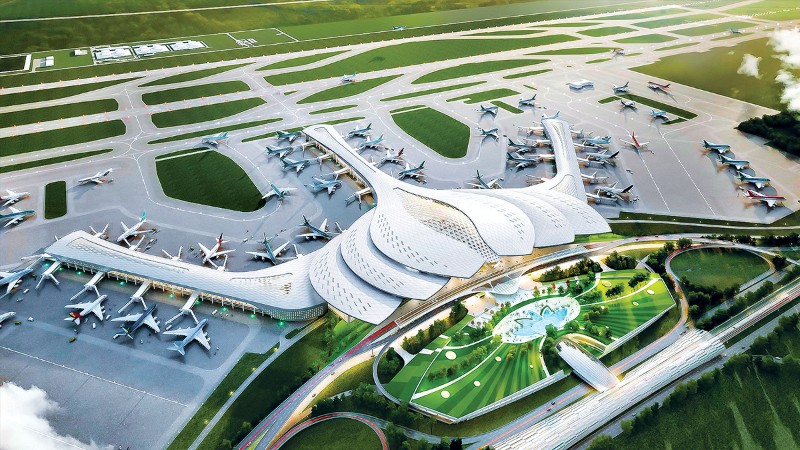
The Civil Aviation Authority of Vietnam (CAAV) has submitted a proposal to relevant authorities, recommending that the Long Thanh International Airport in southern Dong Nai city officially commence commercial operations on December 1, 2026.
According to the CAAV, the proposed transition plan was developed following consultations with relevant authorities, airport operators and airlines. The Airports Corporation of Vietnam (ACV) recommended aligning the transfer with international flight scheduling cycles to ensure a safe, coordinated transition while minimizing disruptions to air transport operations.
Under the proposal, Phase 1 will run from the start of commercial operations until the end of the Winter 2026 flight schedule (December 1, 2026 – March 27, 2027). During this period, airlines will be encouraged to operate international passenger and cargo services in Long Thanh International Airport based on their commercial needs.
Beginning with the Summer 2027 flight schedule (March 28 – October 29, 2027), all long-haul international flights, including international cargo services, will be transferred to Long Thanh.
In Phase 3, corresponding to the Winter 2027 schedule (October 30, 2027 – March 25, 2028), most remaining international flights will also relocate to Long Thanh. The only exception will be international routes of less than 1,000 kilometers operated by Vietnamese airlines, which will continue to operate from Tan Son Nhat International Airport.
The CAAV said the roadmap aligns with international airline scheduling cycles, giving airlines, airport service providers, operators and regulatory agencies sufficient time to prepare resources, coordinate operations and manage potential challenges during the transition.







 Google translate