


Given that the global scale of the Real-World Asset (RWA) tokenization market remains modest, Vietnam has significant opportunities to anticipate the development wave and attract international capital flows.
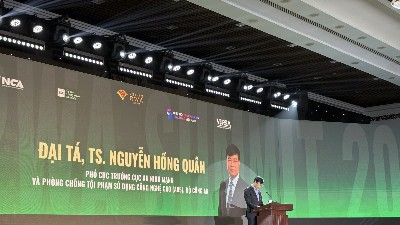
This outlook was shared by Ms. Nguyen Thi Ngoc Quynh, Vietnam Country Director at Republic, during the recent Vietnam RWA Summit 2026, which was co-organized by the Vietnam Blockchain and Digital Assets Association, the National Cybersecurity Association, and the Vietnam Real Estate Association.
According to Ms. Quynh, excluding stablecoins and tokenized deposits, the total value of tokenized real-world assets is currently only around $30 billion globally. This scale is still very small, equivalent to approximately 15% of the market capitalization of the USDT stablecoin issued by Tether alone.
However, the Republic representative noted that the early stage of the RWA market creates an opening for early participants.
“If Vietnam enters the market at this stage, we will be positioned as pioneers in the development cycle, thereby capturing international capital seeking high-quality RWA assets,” she said.
Admittedly, being a frontrunner entails challenges regarding legal frameworks and risk management. Nevertheless, she emphasized that, similar to many previous emerging technology sectors, first-movers often hold a competitive edge in attracting capital and forming robust ecosystems.
From the perspective of domestic businesses, Mr. Tran Viet Thang, Vice Chairman of Lam Dong Investment and Hydraulic Construction JSC, believes that asset tokenization could serve as an effective gateway for capital mobilization in infrastructure - a sector characterized by immense capital requirements but restricted access to financial resources.
According to Mr. Thang, infrastructure investments yield more than just project-specific profits; they generate significant spillover value for the market, society, and the economy. However, the financial capacity of many domestic construction firms remains constrained, even when participating in Public-Private Partnership (PPP) projects.
He argued that infrastructure projects are particularly well-suited for tokenization due to their relatively clear legal status, stringent management and oversight mechanisms, and identifiable asset values.
Nevertheless, to successfully mobilize social resources via this model, Vietnam must establish robust macro policies and equitable benefit-sharing mechanisms, backed by government engagement to instill confidence in long-term investors.
Regarding technological capabilities, Mr. Thang noted that Vietnam is already well-positioned to develop international-standard tokenization platforms that ensure transparency and security.
"What is currently lacking is not the technology, but rather the policy framework and long-term development orientation necessary to attract large-scale capital into the tokenized real-world asset market," Mr. Thang said




 Google translate