


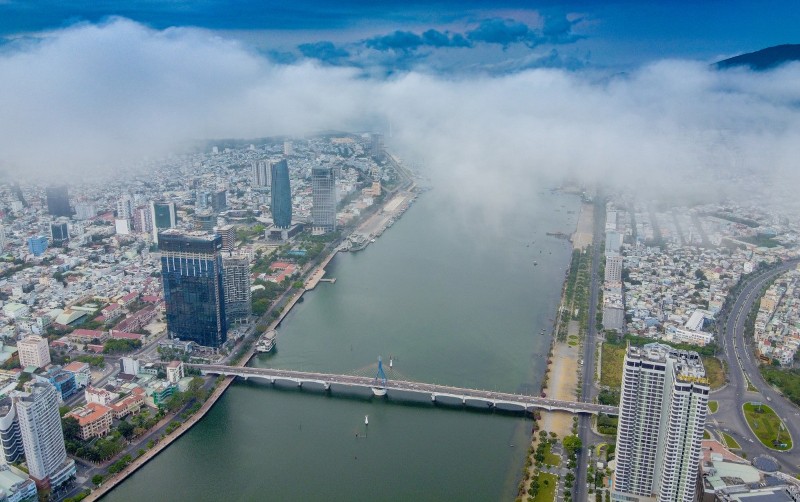
The People’s Committee of central Da Nang city approved controlled testing for four new tech solutions on August 22, three of which focus directly on crypto asset conversion and cross-border settlement.
Under Decisions 3810 and 3811, DANOVA LABS’s “TORA” solution - a non-custodial intermediary converting digital assets (USDT) to fiat currency (VND) and vice versa, integrated with essential services payment gateways and ICETEA SOLUTION’s “Umi Pay” were granted 36-month sandbox approvals to test non-custodial fiat-to-stablecoin (USDT/USDC) conversion solutions.
Meanwhile, Money X-Border received a 24-month approval under Decision 3812 for its multi-chain cross-border settlement infrastructure, and PAYD was granted an 18-month trial for its smart tourism finance app.
These testing models, located across Quang Trung Software Parks and the Da Nang Innovation Startup Support Center, follow earlier sandbox approvals such as MIMO in January 2026 and Basal Pay in August 2025.
Beyond crypto conversion, the central city is aligning its regulatory sandbox with the strategic vision of the Vietnam International Financial Center in Da Nang.
Speaking at a conference in July, Vice Chairman of Da Nang City People’s Committee Ho Ky Minh announced plans to leverage RWA tokenization to raise global investment for key infrastructure, including an over-100-kilometer expressway connecting Danang International Airport with Chu Lai Airport, with an estimated investment of $1 billion.





 Google translate